Anúncios
Do you believe that talent on the ball alone is enough to win in today’s soccer? The reality of the sport has changed dramatically. Intensity, speed and physical strength are now as crucial as technical skill. A poorly prepared body isn’t just an obstacle to high performance; it’s a direct invitation to injuries that can cut short a promising career. Physical conditioning in soccer is no longer a mere add-on; it has become the central pillar supporting tactics, technique and mental resilience throughout the 90 minutes.
Ignoring the science behind conditioning is the most common and costly mistake an athlete can make. An effective training program goes far beyond endless running; it integrates strength training to build a robust frame, strategic nutrition to fuel the engine and recovery techniques to ensure the body regenerates and improves. It’s this holistic approach that separates the players who shine for one season from those who become legends, staying at their peak for years on end.
Anúncios
Longevity and success on the field are forged through dedication off it. This complete guide was designed to demystify physical conditioning in soccer and provide a clear action plan. We’ll cover the pillars of effective training, from aerobic conditioning and muscular power to the importance of flexibility. We’ll also explore strategies for nutrition, hydration and, crucially, the recovery and rest techniques that are key to avoiding injuries and optimizing your performance in every match.
The Vital Importance of Physical Conditioning in Modern Soccer
Think talent on the ball alone wins games? Think again. In modern soccer, the intensity and speed are brutal, and a poorly prepared body is a sure recipe for failure. Physical conditioning in soccer is no longer an add-on; it has become the pillar that supports technique, tactics and decision-making under pressure.
Anúncios
Ignoring the importance of physical training is like going into battle with half your armor. A well-conditioned athlete not only runs more and for longer, but also reacts faster, finishes more accurately and, crucially, stays out of the treatment room. A good plan goes well beyond running, integrating solid Strength Training for Athletes to build a resilient body.
A career’s longevity is defined today by dedication away from the field. The combination of smart training, a proper Soccer Player’s Diet and effective Sports Recovery Techniques separates the players who shine for one season from those who become legends. Taking care of your body is the most strategic decision a player can make.
Understanding the Most Common Soccer Injuries: Causes and Consequences
The glory of a goal and the pain of injury go hand in hand in soccer. The sport’s high intensity, with sprints, sudden changes of direction and constant physical contact, turns the field into a minefield for the athlete’s body. Understanding the most frequent soccer injuries isn’t pessimism; it’s pure strategy for anyone who wants a long, successful career.
Muscle Injuries: Strains and Tears
The burst to win a race for the ball or a powerful shot can take its toll. Muscle strains and tears are the most common causes of injury, occurring when a muscle is stretched beyond its limit. Hamstrings, quadriceps and calves are the most frequent victims, especially when there is accumulated fatigue or an inadequate warm-up.
The consequences range from a few weeks on the sidelines for a mild strain to months of recovery after a complete tear, which may require surgery. Beyond the time lost, strength and speed may never be the same if the rehabilitation, often guided by Sports Physical Therapy, isn’t perfect. Prevention depends directly on good Strength Training for Athletes, which prepares the muscle for impact.
Joint Injuries: Spotlight on the Knee and Ankle
If muscle injuries are common, joint injuries are the most feared. A twist while dribbling, a heavy challenge or a bad landing can cause serious damage to the knee’s ligaments and meniscus, or severe ankle sprains. These joints are the pivots of a player’s movement, and any instability in them directly compromises agility and confidence on the field.
A tear of the knee’s anterior cruciate ligament (ACL), for example, is one of the most devastating injuries in a player’s career. The impact isn’t only physical, with a long and painful recovery, but also psychological. Injury prevention for joints is therefore non-negotiable, focusing on strengthening the muscles that stabilize these structures and improving movement biomechanics.
| Conditioning Pillar | Main Objective | Example Activities |
|---|---|---|
| Aerobic/Anaerobic Conditioning | Ensure endurance for the whole match and explosiveness for decisive moments. | Continuous runs, high-intensity interval training (HIIT), sprints. |
| Strength and Power | Increase stability, strength in physical duels and the ability to accelerate and jump. | Squats, deadlifts, bench presses, plyometric exercises (box jumps). |
| Flexibility and Mobility | Prevent muscle tightness, reduce the risk of strains and improve range of motion. | Dynamic stretching (pre-training) and static stretching (post-training), joint mobility routines. |
| Recovery and Rest | Repair muscle tissue, restore energy, prevent overtraining and consolidate training gains. | Quality sleep, ice baths (cryotherapy), sports massage, myofascial release. |
The Pillars of an Effective Conditioning Program
Think running alone will make you a star? Think again. A real soccer training program is a complex machine, with many gears working together. Ignoring any one of them is the fastest way to the bench or, worse, to the treatment room. Physical conditioning goes far beyond having stamina; it builds a complete, resilient athlete.
To put together a complete workout, you need to understand the pillars that support performance on the field. These fundamentals work together to ensure you have the endurance for 90 minutes, the strength for physical battles and the agility to dribble past opponents. Without a solid foundation in each of these areas, your potential will always be limited.
Aerobic and Anaerobic Conditioning: The Foundation of Endurance
Don’t mix them up: soccer requires two kinds of “gas.” Aerobic conditioning is your long-lasting engine, the one that keeps you running and positioning yourself throughout the match without running out of steam. Think of it as the foundation that supports everything else, built with continuous runs of low to moderate intensity.
Anaerobic conditioning, on the other hand, is the turbo. It kicks in during explosive moments: bursting forward to chase a long ball, sprinting to tackle an attacker or the final run to score the winning goal. These are short, extremely high-intensity efforts that decide games, and your training needs to include sprints and interval work to develop it.
Strength and Power: Essential for Acceleration and Jumping
Strength in soccer isn’t about having the biggest biceps on the team. It’s about generating power to be decisive. A strong player shields the ball better, wins physical duels and has more stability to avoid falls and injuries. Strength is the foundation for power, which is the ability to apply that strength quickly.
Strength Training with Free Weights and Machines
To build the functional strength the game requires, combining free weights and machines is essential. Dumbbells and barbells (free weights) are excellent for activating stabilizer muscles and improving coordination, replicating more natural movements. Machines, in turn, allow you to isolate specific muscle groups safely, making them great for correcting imbalances. Good Strength Training for Athletes integrates both methods intelligently.
Plyometric Training for Explosiveness
Plyometrics is the secret to turning strength into explosive power. Exercises like box jumps, jump squats and lateral jumps teach your muscles to go from an eccentric contraction (lengthening) to a concentric one (shortening) in the shortest time possible. The result is a direct improvement in your acceleration, the height of your jump for headers and the agility of your changes of direction.
Flexibility and Mobility: Preventing Muscle Tightness
Skipping stretching is an amateur mistake that comes at a high price. Flexibility (the muscle’s ability to lengthen) and mobility (the joint’s ability to move through its full range) are crucial for injury prevention. Tight muscles and “locked” joints are an invitation to strains and tears.
An effective program includes dynamic stretching in the warm-up and static stretching at the end of training or on recovery days. Adding joint mobility routines for the hips, ankles and shoulders not only protects your body but also improves the efficiency of your movements on the field, allowing for more powerful shots and smoother dribbling. These practices are key components of the best Sports Recovery Techniques.
Warm-Up and Cool-Down Strategies to Minimize Risk
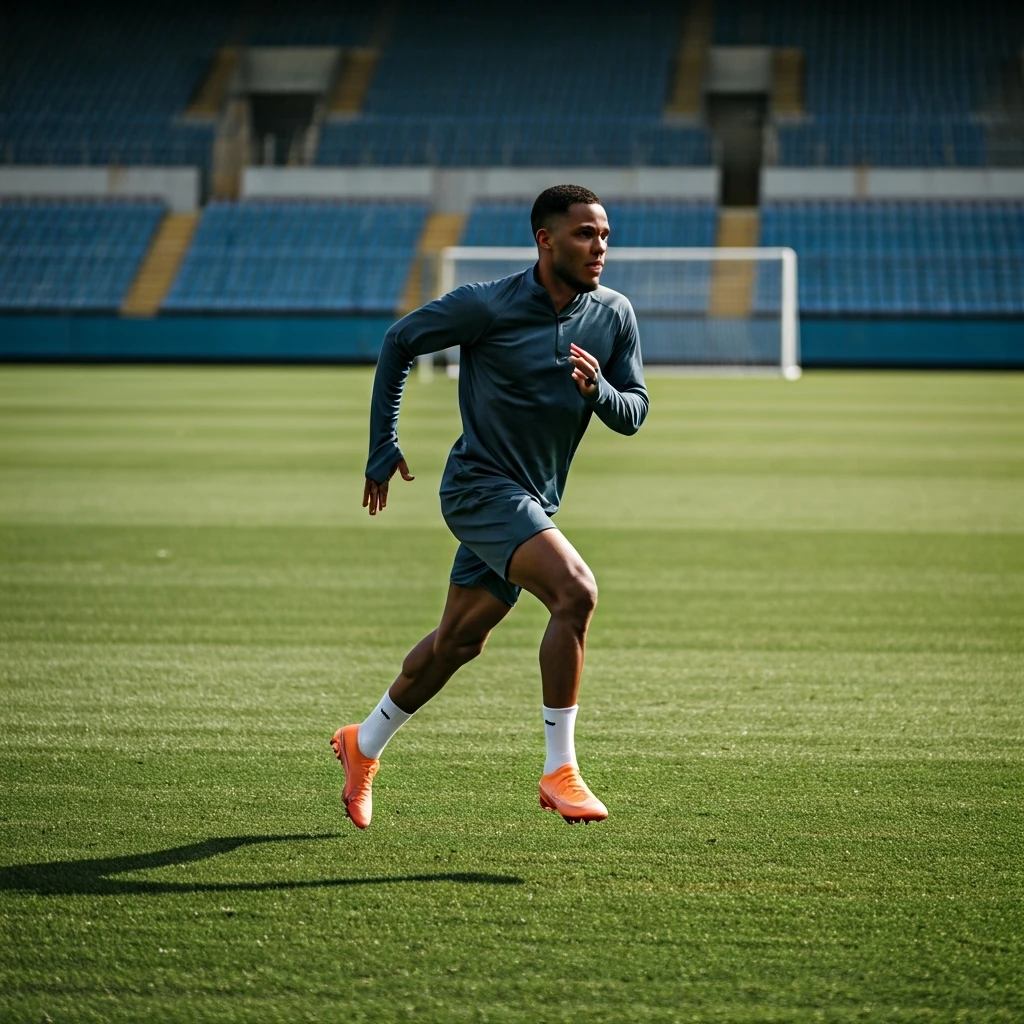
Skipping the warm-up is asking to get hurt. Don’t be that player. Treating the warm-up and cool-down as optional is the fastest way onto the injury list, sabotaging all your physical conditioning in soccer. These two phases are crucial, serving as the prologue and epilogue of your performance, and they are essential for avoiding injuries.
Ignoring these rituals doesn’t make you tougher, just more vulnerable to strains, tears and other aches that can keep you out of the game for weeks. A well-structured pre-game routine prepares your body for impact and exertion, while a proper cool-down starts the recovery process before you even leave the field.
Dynamic Warm-Up: Preparing the Body for Action
Forget the static, standing-still stretches you did in school. A modern soccer warm-up requires constant, progressive movement. The goal is to raise body temperature, improve blood flow to the muscles and activate the nervous system to react with speed and power, replicating the demands of a real match.
An efficient dynamic warm-up should include exercises that activate the main muscle groups used in the sport. Focus on fluid movements that increase joint range of motion and prepare the muscle fibers for explosive action. A good routine can be the difference between a goal and an injury on your first sprint.
- Lunges with Torso Rotation: Activate the hips and core and improve stability.
- Leg Swings: Prepare the hamstrings and hip flexors for shooting and running.
- High Knees and Butt Kicks: Raise the heart rate and improve motor coordination.
- Light Jogging with Changes of Direction: Simulates movement on the field and prepares the ankles and knees.
At the end of training, the training cool-down comes into play to kick-start recovery. The goal is to gradually lower the heart rate and help clear metabolic waste from the muscles. A light jog followed by low-intensity stretching prevents stiffness and prepares the body for rest, making it one of the key Sports Recovery Techniques.
Nutrition and Hydration: The Fuel for the Soccer Athlete
Think only training on the field decides the game? Wrong. What you eat and drink is the fuel that determines whether you shine or fade over the 90 minutes. A well-planned player’s diet, like the one detailed in our guide to the Soccer Player’s Diet, provides the energy needed for explosiveness, endurance and mental focus. Neglecting nutrition is like putting regular gas in a high-performance engine.
Dehydration is the silent enemy of performance and an open door to muscle injuries. Losing even a small percentage of body fluids already affects coordination, strength and the ability to make quick decisions on the field. Proper athlete hydration isn’t just drinking water when you’re thirsty, but a continuous plan before, during and after any physical activity.
After the final whistle, the battle continues in the kitchen, where sports nutrition for soccer becomes crucial. Muscle recovery depends directly on the right intake of protein and carbohydrates to repair damaged fibers and replenish energy stores. This complements other Sports Recovery Techniques, ensuring the body is always ready for the next battle.
Recovery and Rest: The Key to Progress and Prevention
Think only hard training makes you stronger? Think again. Real muscle gains and injury prevention happen when you turn off the engine and let your body rebuild itself. Ignoring recovery is the fastest route to a performance plateau and, worse, to the injury list.
Good physical conditioning in soccer to avoid injuries understands that rest isn’t a waste of time, but an active component of training. It’s during rest periods that physiological adaptations occur, turning effort into concrete results. Without a recovery strategy, all the hard work on the field and in the gym can go down the drain.
Quality Sleep: The Essential Repairer
Sleeping isn’t just switching off; it’s the body’s main repair window. During deep sleep, the body releases essential hormones, such as growth hormone (GH), which are crucial for repairing muscle tissue damaged during exercise. It is the most powerful and natural recovery process there is.
For a soccer athlete, the goal should be 7 to 9 hours of quality sleep per night. That means uninterrupted sleep in a dark, quiet and cool environment. Consistency is key, since poor sleep negatively affects reaction time, decision-making and immune function, increasing the risk of injury and illness.
Active and Passive Recovery Techniques
Muscle recovery in soccer goes beyond simply doing nothing. There are active and passive strategies that speed up the process and prepare the body for the next training session. Active recovery involves low-intensity activities, such as light walking or cycling, which increase blood flow to the muscles, helping to clear metabolic waste.
Passive recovery includes methods that require no physical effort from the athlete, such as massage and cryotherapy. Combining both approaches is the most effective way to optimize recovery. Integrating different Sports Recovery Techniques into your program is a difference-maker for maintaining high performance throughout the season.
Cryotherapy and Contrast Baths
Cryotherapy, or cold therapy, usually in the form of ice baths, is a popular technique for reducing post-exercise inflammation and muscle soreness. Immersion in cold water causes blood vessels to constrict, reducing swelling. Contrast baths, which alternate between cold and hot water immersion, create a “pumping” effect that improves circulation and speeds up the removal of lactic acid.
Massage and Myofascial Release
Sports massage and self-myofascial release with foam rollers are vital for relieving muscle tension. These techniques work to release “trigger points” or muscle knots, restoring flexibility and proper joint movement. When tension becomes chronic or an injury sets in, the intervention of a Sports Physical Therapy professional becomes indispensable.
Monitoring Training Load: Avoiding Overtraining
Overtraining occurs when the body doesn’t have enough time to recover from the accumulated stress of training. It leads to a drop in performance, chronic fatigue and a higher risk of injury. Monitoring training load, in both volume and intensity, is crucial to ensure the stimulus is enough to drive progress but not so excessive that it breaks the athlete down.
Tools such as rating of perceived exertion and resting heart rate monitoring can be valuable indicators of recovery status and athlete rest. Adjusting training based on this data, ensuring that the Strength Training for Athletes plan and field sessions are balanced with recovery, is the hallmark of a smart, sustainable conditioning program.
Specific Training for Injury Prevention: Focus on Stability
Want to bulletproof your body against injuries? Then stop focusing only on the muscles you see in the mirror. True physical conditioning in soccer to avoid injuries isn’t found in the bench press or bicep curl, but in the deep muscles that support your body. The secret is building a solid foundation, focusing on stability to protect the most vulnerable joints on the field.
Core and Posterior Chain Strengthening Exercises
Your powerhouse isn’t your chest; it’s your core and posterior chain (glutes and hamstrings). This region is the engine that stabilizes the pelvis, protecting both the lower back and the knees during sprints, shots and sudden changes of direction. Efficient core strengthening is the first line of defense against the muscle imbalances that cause damage and limit performance.
A good injury prevention workout should include movements such as:
- Planks and their variations: Activate the deep abdominal muscles and stabilize the spine.
- Hip thrusts: Essential for “waking up” the glutes, which are powerful protectors of the knee and lower back.
- Stiff-Leg Deadlift or Good Morning: Strengthen the hamstrings and teach the body to move from the hips, not the spine.
- Rows: Balance upper-body strength, preventing postural imbalances that affect running mechanics.
Ignoring these muscle groups is asking for a hamstring injury or chronic back pain. A smart Strength Training for Athletes plan integrates these fundamental movements. They are your invisible armor, supporting your entire game and boosting your strength on the field.
Proprioception and Balance: Improving Body Awareness
Proprioception is your body’s ability to know where it is in space, a kind of internal GPS that adjusts your joints in milliseconds. In soccer, it’s what saves your ankle from rolling on an uneven pitch or ensures knee stability after jumping for a header. Training this ability means developing neural reflexes that protect you automatically.
Exercises to improve balance and body awareness include:
- Single-leg movements: Standing on one leg, whether still, squatting or passing a ball.
- Unstable surfaces: Using equipment like a BOSU or balance boards to force the stabilizer muscles to work harder.
- Controlled jumps and landings: Focus on landing softly and stably, without letting the knee “cave” inward.
Integrating this routine is as crucial as tactical training. By combining this approach with Sports Recovery Techniques and proper nutrition, you become a more complete athlete. And if the worst happens, the body awareness you’ve developed speeds up any rehabilitation process with Sports Physical Therapy.
The Role of Strength and Conditioning Coaches and Physical Therapists
Think you can put together your own training plan? Careful, the risk is all yours. A strength and conditioning coach isn’t a luxury, but a key piece in turning your potential into reality, avoiding the guesswork that leads to injuries. They are the specialist who designs a tailored Strength Training for Athletes and conditioning plan for your needs, ensuring that every drop of sweat translates into results on the field.
Likewise, the sports physical therapist doesn’t just show up after an injury has already happened. This professional works on the front line of prevention, identifying muscle imbalances and correcting movement patterns before they become a serious problem. Skipping this assessment is like playing Russian roulette with your career, waiting for the next injury to happen.
Success in modern soccer depends on a multidisciplinary team working in harmony. The strength and conditioning coach, the physical therapist, the nutritionist responsible for the Soccer Player’s Diet and the head coach form your elite team away from the field. This integration ensures that every aspect of your performance, from strength to recovery, is optimized so you can shine.
Conclusion: Physical Conditioning as an Investment in Your Career
We’ve reached the end of this guide, and the message is clear: physical conditioning in modern soccer isn’t optional; it’s the foundation of a long and successful career. Talent can open doors, but it’s a well-prepared body that lets you cover the field and stay in the game, season after season. Injury prevention and performance optimization are two sides of the same coin, both forged through an integrated approach that combines smart training, strategic nutrition and disciplined recovery.
Remember that every strength session, every balanced meal and every night of quality sleep is a direct investment in your future as an athlete. It’s not about looking for shortcuts, but about building a solid, resilient foundation. Listen to your body, monitor your training load to avoid overtraining and never underestimate the power of rest. By adopting this mindset, you won’t just be staying out of the treatment room; you’ll be unlocking your full potential on the field.
Frequently Asked Questions About Physical Conditioning in Soccer
How often should I train to avoid injuries in soccer?
The ideal training frequency varies with the athlete’s level and the phase of the season, but the focus should be on balancing stimulus and recovery. Instead of training every day, include 2-3 strength sessions per week and make sure you have at least 1-2 days of complete rest or active recovery. Most importantly, listen to your body’s signals to avoid overtraining.
Which supplements are recommended for soccer players’ recovery?
For recovery, the most effective supplements are protein (such as whey protein) to repair muscle fibers and carbohydrates to replenish glycogen stores. Creatine is also widely studied and proven to improve performance and recovery. It is essential to consult a sports nutritionist before starting any supplement.
Is it possible to prevent all soccer injuries?
No, it’s impossible to guarantee the prevention of 100% of soccer injuries due to the sport’s contact nature and high intensity. However, a well-structured conditioning program focused on strength, mobility and recovery can drastically reduce the risk and severity of injuries. The goal is to minimize the chances, not eliminate them completely.
How can I identify the signs of overtraining?
The main signs of overtraining include an unexplained drop in performance, chronic fatigue that doesn’t improve with rest, an increased resting heart rate and irritability or mood changes. Persistent muscle soreness, insomnia and an increase in the frequency of minor injuries or colds are also important red flags.
What is the difference between static and dynamic stretching in physical conditioning?
Dynamic stretching involves controlled movements that take the muscles and joints through their full range of motion, making it ideal for the warm-up because it prepares the body for activity. Static stretching consists of holding a position for a period of time (e.g., 30 seconds) and is better suited to the cool-down or flexibility sessions, helping to relax the muscles and increase flexibility over the long term.