Anúncios
Soccer has evolved. Long gone are the days when rigid formations and fixed positions set the pace; the modern game has become dynamic, high-speed chess played on grass. Individual genius still shines, but today it’s embedded in complex tactical systems, where collective intelligence and adaptability are the real keys to victory. The beauty of the sport now lies as much in the elegance of a dribble as in the perfection of a defensive transition executed by eleven players in sync.
This transformation didn’t happen by chance. It’s the direct result of the influence of visionary coaches, the data analysis revolution and physical preparation that has taken athletes to a new level of performance. Elite teams no longer cling to a single game plan; they shapeshift during the 90 minutes, switching between attacking and defensive postures with impressive fluidity. Understanding these changes is essential to figuring out why certain teams dominate and how the sport will keep reinventing itself.
Anúncios
In this article, we’ll dive deep into the tactical trends shaping today’s soccer. We’ll unpack the secrets behind hybrid systems, which change shape between attack and defense. We’ll analyze the rise of ‘gegenpressing’ as an attacking weapon, the goalkeeper’s new role as a playmaker and the crucial importance of reinvented positions, like fullbacks and ‘box-to-box’ midfielders. Get ready to see the game through new eyes, understanding the science and strategy that define today’s champions.
The Current Tactical Landscape: An Overview of New Approaches
Forget the 4-4-2. Today’s game is a puzzle in constant motion. Tactical trends in soccer have abandoned fixed positions in favor of impressive fluidity, where defenders attack and attackers defend. In modern soccer, players are versatile pieces on a board that changes every minute, performing multiple roles depending on the phase of play.
Anúncios
Rigid systems have given way to flexible principles of play. A team can start pressing high and, minutes later, reorganize into a low, compact block to exploit counterattacks. This capacity for continuous tactical adaptation, often during the same match, is what defines elite teams and represents the sport’s true tactical evolution.
This complexity doesn’t come out of nowhere; it’s fueled by meticulous preparation off the field. In-depth Performance Analysis in Soccer makes it possible to identify opponents’ patterns and weaknesses, while Physical Preparation in Modern Soccer ensures athletes have the energy to meet these dynamic demands. The result is a game that’s smarter, faster and more unpredictable than ever.
The Rise of Hybrid Systems and Tactical Flexibility
Forget the numbers on paper; tactics are now a chameleon. Top-level soccer has abandoned the rigidity of a static 4-4-2 or 4-3-3, embracing hybrid systems in soccer. The idea is simple and brilliant: the team organizes one way to defend and transforms into something completely different to attack, all within the same play.
This dynamic approach makes teams unpredictable and hard to neutralize. Tactical flexibility is no longer a luxury, but a necessity for competing at a high level. Coaches look for versatile players capable of performing multiple roles depending on the moment in the game and the position of the ball.
From 4-3-3 to 3-2-5: Understanding the Transitions
One of the most common transformations is the metamorphosis from a defensive 4-3-3 into an overwhelming 3-2-5 in attack. Picture the scene: on winning the ball, one fullback pushes up like a winger, while the other joins the center-backs to form a back three. At the same time, one of the midfielders drops to form a double pivot, freeing the others to overload the opponent’s box.
The goal is to create numerical superiority in the channels and in the finishing zone, dismantling the opposing defense. These fluid formations demand tremendous game intelligence and perfect communication between players. The mindset to absorb and execute these changes under pressure is a pillar, and this is where Sports Psychology: The Mind of Champions becomes a competitive edge.
For this orchestra to work, every musician needs to be in peak form. The physical demand of switching between defending at fullback and attacking like a winger is brutal. That’s where good Physical Preparation in Modern Soccer comes in, making sure players have the endurance and explosiveness to handle these multiple tasks for all 90 minutes.
| Tactical Trend | Main Description |
|---|---|
| Hybrid Systems | Formations that change drastically between the defensive and attacking phases (e.g., 4-3-3 to 3-2-5), seeking to create numerical superiority and unpredictability. |
| Attacking/Inverted Fullbacks | Wide players who act as playmakers, either pushing up to the byline or cutting inside to operate as midfielders. |
| Gegenpressing | Immediate, coordinated pressing carried out seconds after losing possession, aiming to win the ball back in advanced areas and catch the opponent off guard. |
| Ball-Playing Goalkeeper | A goalkeeper skilled with their feet, acting as the team’s first playmaker and breaking the opponent’s press, as well as acting as a sweeper outside the box. |
| Data Analysis (Big Data) | Use of advanced metrics (like xG and heat maps) to inform tactical decisions, identify opponent patterns and optimize team performance. |
The Growing Role of Fullbacks and Wingbacks in Attack and Defense
The fullback who just ran up and down the touchline? That player is gone. The position has been reinvented, turning wide players into central pieces on the tactical board. Today, the fullback role in soccer requires the athlete to be a playmaker, an incisive attacker and a relentless defender, all at the same time. This evolution has completely changed the dynamics of matches.
Attacking fullbacks and modern wingbacks are no longer mere supporting actors serving forwards with crosses. They’re protagonists who break lines, create numerical superiority in different areas of the field and actively take part in finishing moves. The technical and tactical demands of performing this role masterfully are extremely high, separating ordinary players from truly special ones.
Inverted Fullbacks: Creators of Space and Opportunity
One of the biggest recent tactical revolutions is the use of inverted fullbacks. Instead of staying wide on the touchline, these players cut inside, acting as additional midfielders. This movement creates controlled chaos in the opposing defense, opening unexpected spaces and overloading the marking in the central channel. The intention is clear: disrupt the opponent’s defensive structure and open paths to goal.
This maneuver requires uncommon game intelligence and the technical ability to play under pressure in congested areas. Decision-making needs to be quick and precise, whether to pass, dribble or shoot. Detailed Performance Analysis in Soccer is crucial so coaching staffs can measure the effectiveness of these movements and adjust positioning to maximize attacking impact.
The Defensive Contribution of Wingbacks/Fullbacks
Despite the attacking glamour, these players’ defensive responsibility has increased exponentially. After taking part in an attacking build-up in the opponent’s half, the wingback or fullback needs a fast recovery run to rebuild the back line. The defensive transition has become one of the most critical moments of the game for teams that use such aggressive fullbacks.
Any positioning error or delay in getting back can leave the defense exposed to lethal counterattacks. An empty space on the flank is an invitation for the opposing winger to attack at speed. So tactical discipline and the ability to read the game to anticipate turnovers are as important as the ability to cross or dribble.
Impact on Marking and Cover
When a fullback pushes up or inverts, the team’s defensive structure needs to adapt instantly. This requires collective compensation, where defensive midfielders and midfielders must cover the spaces left on the flanks. This defensive fluidity is complex and requires perfect understanding between players to avoid leaving holes in the defense.
This dual demand, attacking with complexity and defending with urgency, pushes physical strain to an extreme level. The ability to maintain intensity in both phases of the game is what defines the elite of the position. This is where robust Physical Preparation in Modern Soccer becomes indispensable, making sure the player has the endurance and explosiveness needed to carry out their multiple tasks for all 90 minutes.
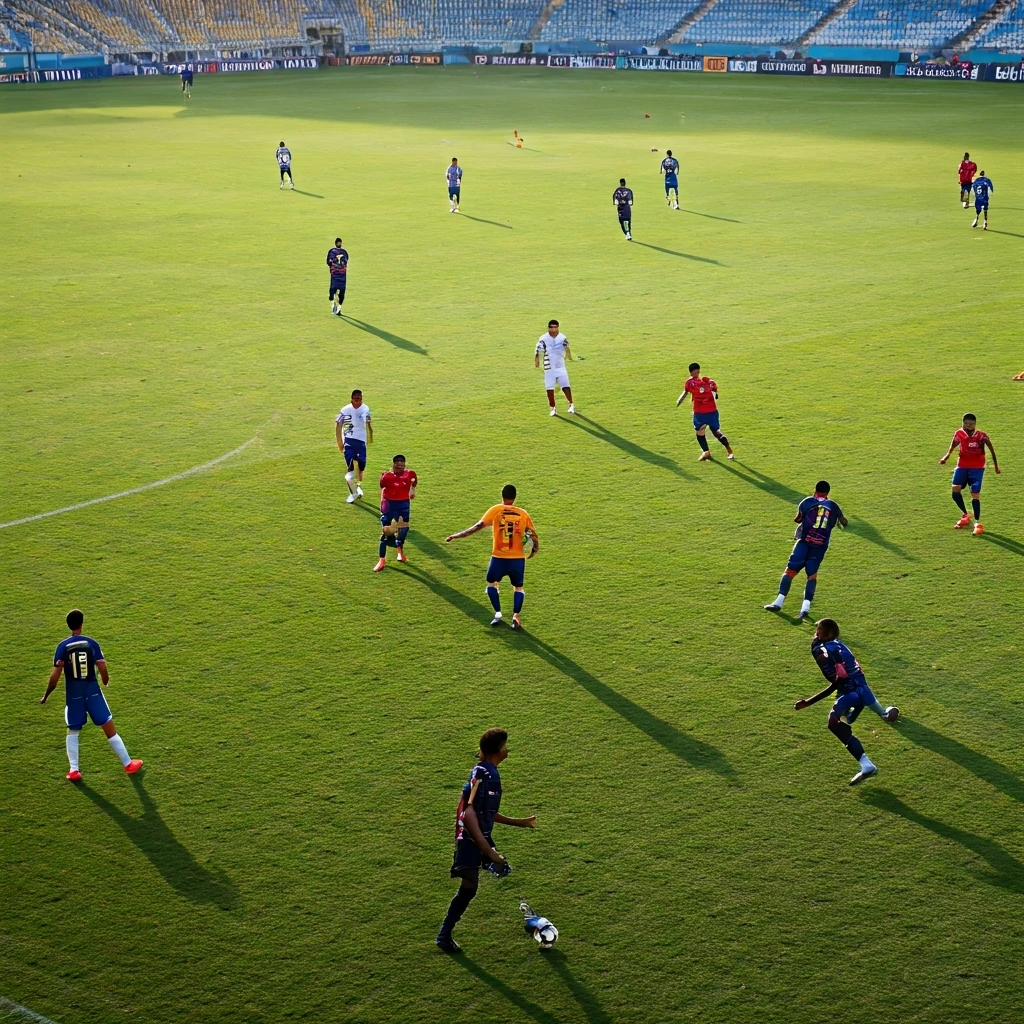
The Intensification of ‘Gegenpressing’ and Winning the Ball Back
Forget everything: the best time to attack is right after you lose the ball. That’s the radical philosophy that defines gegenpressing, a tactic that has turned defense into an attacking weapon. Instead of dropping back and regrouping, the team hunts the ball like a predator, smothering the opponent before they can even think about countering. It’s the art of turning chaos in your favor.
The core idea is that the player who has just won the ball is at their most vulnerable. They’re still mentally adjusting from defense to attack, and their team doesn’t yet have a defined attacking structure. It’s the perfect window for immediate, coordinated pressure, seeking counterpressing recovery in advanced areas of the field, where a tackle can instantly turn into a clear scoring chance.
Principles of Gegenpressing: Attack to Defend
The pillar of gegenpressing is a proactive mindset: the best defense is an immediate attack on the opponent’s possession. When the ball is lost, triggers are activated and the nearest players converge on the ball carrier in a synchronized movement. The goal isn’t just to win the ball, but to force a mistake, a bad pass or a desperate hoof that returns possession in favorable conditions.
This approach offers multiple tactical benefits. First, it neutralizes deadly counterattacks before they start, protecting your own defense. Second, it allows the team to maintain a high position on the field, pinning the game in the opponent’s half. Finally, it creates scoring opportunities from tackles in the final third, catching the opposing defense completely disorganized.
Training and Effective Execution
Implementing this strategy is a mission that demands physical and mental perfection. The demand for Physical Preparation in Modern Soccer is brutal, requiring athletes to produce repeated bursts of explosiveness throughout the match. There’s no room for hesitation; the reaction must be instinctive, a concept explored in depth in Sports Psychology: The Mind of Champions, where decision-making under pressure is fundamental.
Training involves exhausting transition drills and small-sided games to simulate the required intensity. Every player needs to understand their role, the triggers for starting the press and the cover zones. Performance Analysis in Soccer is crucial here, using data to measure pressing effectiveness, ball recovery time and coordination between the team’s units.
Regional Variations of Pressing
Although the philosophy is the same, the execution of high pressing in soccer varies. The German school, popularized by coaches like Jürgen Klopp, tends to be more chaotic and intense, focused on swarming the ball carrier with several players. It’s a press that aims to induce panic and capitalize on the disorder created in the opponent.
On the other hand, the approach often seen in Spain, influenced by Pep Guardiola, is more positional. Instead of just hunting the player with the ball, the pressure is directed at closing the nearest passing lanes. The goal is to corner the player, forcing them to make the play the defending team wants them to make, winning possession back in a more controlled and structured way.
The Goalkeeper Revolution in Build-Up Play
The goalkeeper who only guarded the goal? That idea is history. The new order in soccer requires the number 1 to be the team’s first attacker. The concept of the ball-playing goalkeeper has transformed the position, requiring them to have quality with their feet to start plays from the back and break the opponent’s first line of pressure.
This evolution goes beyond a simple pass. The modern sweeper-keeper operates outside the box, working as an extra center-back to cover space and intercept long balls. This role requires sharp game reading and quick decision-making, and it’s a huge tactical differentiator for any team that wants to control possession.
Top clubs invest heavily in specific training to develop this skill, which goes far beyond technique. The confidence to play out from the back under pressure is a crucial factor, often shaped by Sports Psychology: The Mind of Champions. The goalkeeper is no longer just a lightning rod for shots; they’re the starting point for victory.
Data Analysis and the Science Behind Tactical Decisions
Intuition in soccer is dead. Now, math rules the game. The era of big data in sports has arrived in force, turning opinions into certainties and redefining what it means to be tactically intelligent. Clubs and national teams are investing heavily to crack the opponent’s code before the opening whistle, using tactical science as their main secret weapon.
This revolution is driven by massive data collection during training and matches. Every pass, run and tackle is tracked and turned into a detailed report. Soccer data analysis allows coaching staffs to identify patterns invisible to the naked eye, from a fullback’s preferred channel to the area of the field where a forward loses the ball most often under pressure.
The result is surgical preparation for every matchup, where the strategy is built on probabilities and statistics. Knowing exactly how an opponent behaves in defensive transitions or on set pieces offers a huge competitive advantage. This level of detail is the foundation of Performance Analysis in Soccer, a discipline that has become indispensable.
Advanced Metrics and Their Application
The days of looking only at possession and shots on goal are over. Advanced metrics, like Expected Goals (xG), heat maps and pressing by third of the field, provide a much deeper view of the game. xG, for example, doesn’t just measure whether a shot was on target, but the real probability of that shot becoming a goal based on position and context.
With this intelligence, a coach can adjust the team in real time, instructing players to exploit high-probability scoring zones. In addition, data is crucial for squad management, monitoring fatigue and optimizing Physical Preparation in Modern Soccer to prevent injuries. Tactical science is no longer a luxury, but the pillar that supports top teams.
The Impact of Modern ‘Box-to-Box’ Midfielders and ‘Pivots’
Games are won in midfield. The era of the specialist, the number 10 who doesn’t defend or the holding midfielder who only destroys, is over. Today’s soccer demands complete athletes who master every phase of the game, and it’s in the heart of the field that this revolution is most evident, with two crucial roles: the box-to-box midfielder and the modern pivot.
The Versatility of the Box-to-Box: Linking Defense and Attack
The box-to-box midfielder is a team’s tireless engine. This player has the physical capacity and tactical intelligence to cover the field from one box to the other, actively taking part in both defense and attack. They don’t just win the ball back, but are also expected to break into the opponent’s box, showing up as a surprise element to finish moves.
This ability to cover vast areas of the field while maintaining a high level of intensity is a direct reflection of the evolution in Physical Preparation in Modern Soccer. The role demands an athlete with a marathoner’s endurance and a sprinter’s explosiveness, becoming a piece that connects the units and gives the team brutal dynamism. Their constant presence all over the field unbalances any defensive system.
The Maestro in the Middle: The Vision of the Modern Pivot
Far from being just a destroyer, the modern pivot in soccer is the team’s tactical brain. Positioned in front of the defense, they’re responsible for dictating the tempo of the match, starting the build-up and breaking the opponent’s pressing lines with precise passes. Their vision allows them to find spaces few others can see.
This player needs a calm and mental clarity that are studied by Sports Psychology: The Mind of Champions, because every decision they make directly influences the behavior of the whole team. Detailed Performance Analysis in Soccer shows that the best pivots are those who, in addition to tackling, record a high number of progressive passes that put teammates in advantageous situations.
How These Roles Create Numerical Superiority
The main tactical weapon of these roles is creating numerical superiority in key areas. When a box-to-box midfielder pushes forward, they become an extra attacker, creating 2v1 or 3v2 situations against defenders who are caught by surprise. This movement breaks down the defensive organization and opens space for the forwards.
The modern pivot, on the other hand, creates superiority by manipulating space with the ball. By drawing markers into one area and quickly switching play to the opposite side, they find a free teammate. This intelligent management of attacking and defensive positioning is one of the most lethal tactical trends in today’s soccer.
The Future of Tactics: Where Is Soccer Heading?
The game as we know it is living on borrowed time. The tactical future of soccer won’t be decided only on the field, but in labs and analysis rooms. The relentless pursuit of a competitive edge is pushing the sport’s limits, combining increasingly specific Physical Preparation in Modern Soccer with disruptive technologies that promise to revolutionize what we understand as strategy.
Upcoming trends point to an even more fluid and adaptable game, where positional rigidity is likely to decrease drastically. This will give way to systems in which players understand and occupy space intelligently and collectively. The idea is to create organized chaos, in which versatility and the ability to read the game in real time become the most valuable weapons for any top team.
Artificial Intelligence and Decision-Making
Artificial intelligence (AI) has gone from science fiction to a powerful behind-the-scenes tool. Advanced algorithms process massive amounts of data to identify patterns the human eye can’t see, influencing everything from player signings to in-game adjustments. Good Performance Analysis in Soccer, powered by AI, can predict the opponent’s movements and suggest the best responses in seconds.
This technological integration redefines the role of the player and the coaching staff, turning the field into a dynamic chessboard. The athlete’s brain will be as important as their feet, requiring almost instantaneous information processing, a field explored by Sports Psychology: The Mind of Champions. Innovations in soccer are creating hybrid athletes, capable of executing with physical perfection and superior tactical intelligence, shaping the spectacle of the future.
The Future Is Now: Soccer’s Constant Tactical Reinvention
The journey through the tactical evolution of modern soccer shows us an undeniable truth: the game is smarter, faster and more integrated than ever. The strategies discussed, from the fluidity of hybrid systems and the intensity of ‘gegenpressing’ to the goalkeeper’s involvement in attacking build-up, aren’t passing fads, but pillars of a new philosophy. Tactical versatility and game intelligence have become as valuable as pure technical skill, demanding complete athletes capable of thinking and executing at blistering speed.
Looking at the horizon, this evolution shows no signs of slowing down. Data analysis will continue to deepen, revealing new layers of complexity and offering even subtler competitive advantages. The next great tactical revolution may already be being tested on some training ground, ready to challenge current conventions. Soccer, at its core, remains in a state of perpetual reinvention, ensuring the spectacle between the lines continues to fascinate and surprise us.
Frequently Asked Questions About Soccer Tactics
What are the main tactical formations in soccer today?
Today’s formations are more fluid than fixed, known as hybrid systems. Instead of a static 4-4-2, elite teams use principles of play that transform, like a 4-3-3 that becomes a 3-2-5 in attack, focusing on occupying space and on players’ roles, not on rigid numbers.
How does the ‘false 9’ fit into modern tactical trends?
The ‘false 9’ is a forward who, instead of staying fixed in the box, drops into midfield to take part in the build-up. They fit perfectly into the trends of fluidity and unpredictability, because their movement disorganizes the opposing defense, opens space for other players to make runs and creates numerical superiority in the central area.
What’s the difference between ‘pressing’ and ‘gegenpressing’?
‘Pressing’ is the general act of pressuring the opponent to make their actions harder. ‘Gegenpressing’ (or counterpressing) is a specific, highly coordinated tactic: immediate, intense pressure applied seconds after losing possession, aiming to win the ball back as quickly and as close to the opponent’s goal as possible.
Does data analysis really change the result of a soccer match?
Yes, data analysis offers a crucial competitive advantage. It allows coaching staffs to identify weaknesses in the opponent, optimize their own strategies based on metrics like Expected Goals (xG) and manage athletes’ physical workload. This information supports decisions that can directly influence the result of a match.
How important is player versatility for today’s tactics?
Versatility is fundamental in modern soccer. Because tactics are fluid and systems are hybrid, players need to be able to perform multiple roles on the field, like a fullback who acts as a midfielder or a forward who starts the press. This versatility allows the team to adapt tactically during the game without needing substitutions.