Anúncios
Have you ever stopped to think that soccer is much more than 22 players chasing a ball? Behind every pass, dribble, or goal, there’s a universe of strategies, a true game of chess played at high speed. Soccer tactics aren’t just numbers on a clipboard, but philosophies that define a team’s style, a coach’s career, and a generation’s legacy. They’re the secrets that turn a group of athletes into a winning machine, capable of dominating opponents and enchanting crowds.
Throughout history, tactical evolution has redefined the sport many times. We went from naive, ultra-attacking formations to impenetrable defensive systems, like the famous Italian Catenaccio, which proved that shutting down your own box could be a lethal weapon. Next, we witnessed the Dutch Total Football revolution, which abolished fixed positions and introduced a fluidity on the field that seemed to come from the future. Each of these changes was a response to the previous one, in a continuous cycle of innovation and adaptation that shaped the game we love today.
Anúncios
In this article, we’ll crack the code behind the greatest tactical revolutions in history. You’ll understand how the Italian “bolt” worked, why Cruyff’s “Clockwork Orange” was so mesmerizing, and how Pep Guardiola and Jürgen Klopp became the masters of modern systems with Tiki-Taka and Gegenpressing. Get ready for a deep journey through the secrets of soccer, discovering the strategies that didn’t just win championships, but forever changed the way the game is played and thought about.
The Tactical Evolution of Soccer: A Journey Through Time
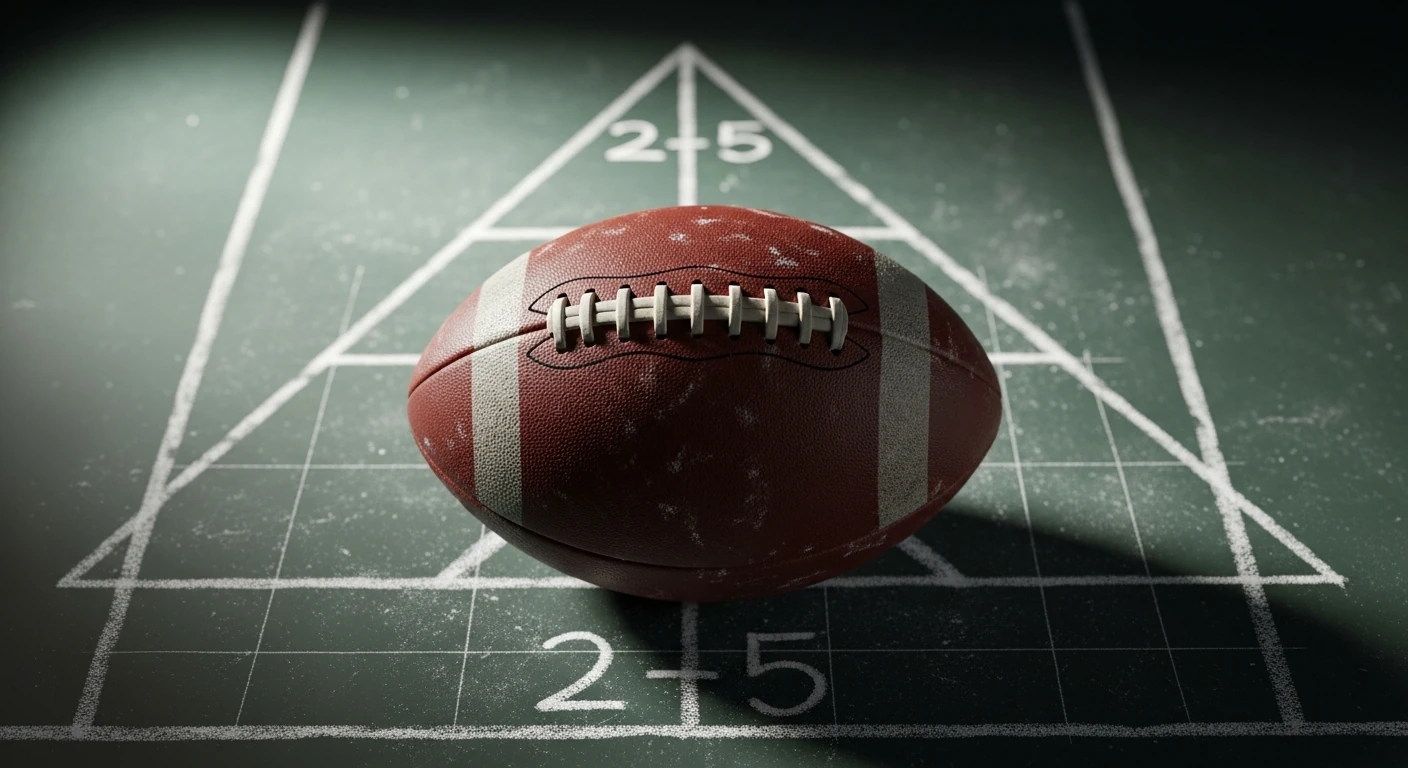
The soccer you watch today has nothing in common with the game of old. Soccer’s evolution transformed a sport of brute force into chess played with the feet. In the beginning, classic formations like the 2-3-5, known as “The Pyramid,” dominated, with an almost total focus on attack and little concern for defense.
Anúncios
This attacking mindset changed drastically with the arrival of reactive systems, like the famous Italian Catenaccio. The history of soccer tactics shows that defending became an art, proving that an organized team could neutralize a superior attack. That was when the importance of a genius on the bench became clear, reinforcing how The Coach’s Influence in Soccer can change a team’s destiny.
Today, we live in the era of tactical fluidity, where positions are less rigid and players need to be versatile. Concepts like the Dutch “Total Football” paved the way for today’s complex systems, which demand spatial intelligence and a constant ability to adapt. Fixed setups have given way to continuous movement that confuses opponents and delights fans.
The Legacy of Italian Catenaccio: Defense as Art and the Surprise Attack
Tired of teams that only attack? Italy taught the world how to win by slamming the door in the opponent’s face. Catenaccio, which means “door bolt” in Italian, was the tactic that turned defense into a lethal and controversial weapon. This philosophy of defensive soccer gained fame in Italy, prioritizing an impenetrable back line and surgical counterattacks that caught opponents by surprise. The idea was simple and brutal: frustrate the opponent until they made a mistake, then attack with deadly speed to score a single, decisive goal.
Helenio Herrera and the Reinvention of Defense
No one applied Catenaccio with as much mastery as coach Helenio Herrera. In charge of his “Grande Inter” in the 1960s, he perfected the system, popularizing the role of the libero, or sweeper, an extra defender positioned behind the main defensive line to clear any dangerous ball. This tactical innovation is a classic example of The Coach’s Influence in Soccer, creating an almost impassable barrier.
Herrera’s tactic wasn’t just about destroying the opponent’s game; it was a calculating and patient art. The team defended in a compact block, with rigorous tactical discipline, waiting for the exact moment to win the ball and release its forwards at speed. An Analysis of Classic Matches from that era shows how Inter Milan dominated Europe while conceding few goals, winning games by the narrowest of margins.
Although often criticized as “anti-soccer,” the legacy of Catenaccio is undeniable and still resonates today. It proved that an organized defense can be as successful as an overwhelming attack, and its principles of compactness and quick transition are studied in Modern Soccer Training. The system also elevated defenders to stardom, placing them among the Greatest Players in Soccer History for their tactical intelligence and ability to shut down star players.
| Tactic | Origin / Main Proponent | Key Concept |
|---|---|---|
| Catenaccio | Italy / Helenio Herrera | Ultra-compact defense with a sweeper, frustrating the opponent and relying on deadly counterattacks. |
| Total Football | Netherlands / Rinus Michels & Johan Cruyff | Elimination of fixed positions, with players constantly switching roles to dominate space. |
| Tiki-Taka | Spain / Pep Guardiola | Absolute control of the game through possession with short passes, movement, and counter-pressing after losing the ball. |
| Gegenpressing | Germany / Jürgen Klopp | Immediate, coordinated pressure to win the ball back in the attacking third seconds after losing it. |
| Jogo Bonito | Brazil / Various | A philosophy that values individual creativity, dribbling, and improvisation above tactical rigidity. |
Dutch Total Football: The Revolution of Versatility and Possession
What if any player could attack, defend, and create? Total Football broke the rules of the game by turning that question into reality. This bold Dutch tactic eliminated the rigidity of fixed positions, proposing a system in which every outfield player could perform any role on the field. It was a true revolution that shocked the world and changed the way the sport was thought about.
The Philosophy of Rinus Michels and the Dutch National Team
The architect behind this revolution was coach Rinus Michels. With the 1974 Dutch national team, nicknamed the “Clockwork Orange,” he introduced the world to a team that moved in perfect sync, pressing opponents mercilessly. Michels believed space was the key element of the game, and his team had to dominate it by shrinking the field on defense and stretching it on attack. His approach is a case study in The Coach’s Influence in Soccer.
The Importance of Switching Positions
The heart of the Dutch tactic was the constant switching of positions. If a defender pushed forward with the ball, a midfielder or forward immediately covered his space, keeping the defensive structure intact. This fluidity created tactical confusion for opponents, who didn’t know whom to mark. Responsibility was no longer individual, but collective, requiring extremely intelligent and physically fit players.
Cruyff’s Legacy at Barcelona
No one understood and executed Total Football better than Johan Cruyff. First as a player and then as a coach, he became the greatest ambassador of this philosophy, standing as one of the biggest names among the Greatest Players in Soccer History. When he took charge of Barcelona, he implemented and refined Michels’s concepts, creating the legendary “Dream Team” and laying the foundations for the style of play that defines the club to this day.
Possession as a Tool of Dominance
Cruyff added an extra layer to the tactic: possession as the main defensive mechanism. His logic was simple and brilliant: if your team has the ball, the opponent can’t score. He taught his teams to value possession through short passes and constant movement, forming triangles that always offered options. This concept evolved and is a central theme in any Analysis of Classic Matches from that era, directly influencing Modern Soccer Training.
The Brazilian Tactics That Enchanted the World: Jogo Bonito and Street Smarts
Forget tactical rigidity. In Brazil, soccer is art, swagger, and improvisation. The famous jogo bonito (“the beautiful game”) isn’t a formation on paper, but a philosophy that pulses on the field, valuing individual freedom, dribbling, and creativity. Brazil’s tactics have historically relied on “malandragem,” or street smarts, to beat opponents with sheer genius, turning matches into spectacles.
This unique approach allowed incomparable talents to emerge and become legends. Brazilian soccer has always been a stage for individual brilliance, where a flashy move is worth as much as a goal. It’s no coincidence that the list of the Greatest Players in Soccer History is dominated by athletes who embodied this daring and unpredictable style.
The coach’s role here is different, more a manager of talent than an inflexible strategist. The idea is to create an environment where confidence flourishes, allowing the magic to happen without the shackles of a restrictive system. Grasping this is essential to understanding the true The Coach’s Influence in Soccer as played on Brazilian fields.
Guardiola and Tiki-Taka: The Supremacy of Possession and Control
The ball isn’t your enemy; it’s your best friend. This philosophy, taken to the extreme by Pep Guardiola, gave life to tiki-taka, a system that conquered the world. More than just passing the ball sideways, this tactic is an art form based on control, patience, and a relentless search for spaces that don’t seem to exist.
The central concept is simple: if the opponent doesn’t have the ball, they can’t score. Barcelona’s tactics under his command were mesmerizing, turning the field into a carousel of short passes and constant movement. Numerical superiority was created in every part of the field, leaving opponents chasing shadows.
The Pillars of Tiki-Taka: Passing, Movement, and Pressure
Three elements define the perfect execution of tiki-taka. The first is the short, quick pass, forming triangles that always offer the ball carrier two options. The second is movement off the ball, with players switching positions to disorganize the defense and open up passing lanes. Without this movement, possession becomes sterile and predictable.
The third pillar, and perhaps the most aggressive, is counter-pressing after losing the ball. The “six-second” rule dictated that, upon losing possession, the team had that short window to smother the opponent and win the ball back as quickly as possible. This mentality turned defense into an extension of attack, a fundamental concept of Modern Soccer Training.
Building Out From the Back
Everything starts with clean buildup from the back. In tiki-taka, playing out from the back is an art that forbids the hopeful long ball forward. The goalkeeper acts as a sweeper, and the center backs split wide, creating safe passing lanes to start the play calmly and draw the opponent’s pressure, generating vital space in midfield.
Variations and Adaptations at Manchester City
Thinking the tactic hasn’t evolved is a big mistake. At Manchester City, Guardiola adapted his model to the speed and physicality of English soccer. Possession remains the foundation, but with greater verticality and faster transitions, showing how The Coach’s Influence in Soccer can shape a system to different realities.
Long, precise switches of play, executed by players like De Bruyne, became a weapon for breaking down compact defensive lines. The team learned to alternate between patient control and lightning-fast attacks, an evolution that can be seen in any Analysis of Classic Matches from the club’s recent era.
The False 9 and Attacking Fluidity
No piece was as disruptive as the false 9. Instead of a fixed center forward, Guardiola used a mobile player who dropped into midfield, dragging center backs with him and creating a vacuum in the box for wingers and midfielders to run into. This role, immortalized by some of the Greatest Players in Soccer History, such as Messi, is the pinnacle of attacking fluidity.
The Rise of German Gegenpressing: Intensity and Rapid Recovery
What if the best attack was your own defense? Gegenpressing turned the game upside down with a brutally simple idea. Instead of dropping back after losing possession, the team swarms forward to smother the opponent and win the ball back within seconds, turning a moment of vulnerability into a deadly scoring opportunity.
This German tactic, which translates as “counter-pressing,” exploits chaos. The logic is that the team that has just won the ball is disorganized and vulnerable. Immediate, coordinated pressure not only wins back possession but often creates clear scoring chances, catching the opposing defense completely out of shape and off guard.
Klopp and Borussia Dortmund: The Start of the Revolution
No one embodies gegenpressing better than Jürgen Klopp. It was with him in charge of Borussia Dortmund that this philosophy went from a tactical concept to a rock ‘n’ roll spectacle on the field. He built a young, tireless team that ran as if there were no tomorrow, relentlessly hunting the ball in the attacking third.
Klopp’s Dortmund didn’t just win titles; it changed perceptions of intensity. The approach highlighted how The Coach’s Influence in Soccer can create a unique identity, and many of those matchups are now the subject of Analysis of Classic Matches. Its success was based on specific pressing triggers and a level of physical preparation that became a pillar of Modern Soccer Training.
That team’s legacy is a tactic that spread across Europe. Counter-pressing became one of the secrets of modern soccer, a powerful weapon that demands perfect synchronization, lungs of steel, and an aggressive mentality to turn a lost ball into an instant victory.
Hybrid Tactics and Modern Flexibility: The Future of the Game
Forget rigid, predictable systems. Top-level soccer is now a tactical chameleon, where the only rule is to have no fixed rules. Hybrid tactics in soccer aren’t just a trend, but the new reality, blending different philosophies to create unpredictable monsters that adapt to every second of the game.
The idea of a team playing 90 minutes in a static 4-4-2 is dead and buried. Modern soccer demands incredible fluidity, with teams that change their skin depending on possession, the zone of the field, and the opponent. This tactical flexibility is what separates elite teams from the rest, turning the pitch into a high-speed chessboard.
The Importance of Real-Time Adaptation
Winning is no longer about having the best initial plan, but about who adjusts the fastest. Real-time adaptation is the main weapon in a modern coach’s arsenal, a skill that decides the outcome of matches and championships. Reading the game and changing strategy in the heat of the moment is clear proof of the coach’s influence in soccer.
This ability to shift during the match neutralizes the opponent’s strengths and exploits weaknesses that emerge unexpectedly. A subtle adjustment, like switching the wingers or changing the height of the defensive line, can completely dismantle the opponent’s plan. It’s a psychological and tactical war fought in plain sight.
Examples of Tactical Transitions and Shifts
Picture a team that defends in a compact 5-4-1, with deep lines and every space closed off. The moment it wins the ball, the wingbacks surge forward like rockets, the defensive midfielder pushes up, and the system instantly transforms into a lethal 3-4-3. This dizzying transition catches defenses off guard, creating numerical superiority where there was once a defensive wall.
Another classic example is the shift between a 4-3-3 and a diamond 4-4-2. With the ball, the team exploits width with its wingers. Without it, one of the wingers drops back to close down the midfield, strengthening central marking and forcing the opponent to play down the flanks, where the pressing trap is already set.
The Role of the Performance Analyst
Behind the scenes of this tactical revolution is a crucial figure: the performance analyst. Far from being just a “stats guy,” the analyst is the coaching staff’s tactical spy. Their mission is to decode the patterns of both the opponent and their own team, providing vital information that feeds the coach’s decisions before, during, and after games.
These professionals use cutting-edge technology to turn raw data into competitive intelligence. They identify everything from players’ average positioning to the speed of transitions, offering a detailed map of the opponent’s secrets. Analysis of classic matches shows how this role has evolved from notes in a notebook to a complex data system.
Technology and Data Analysis in Tactical Decisions
Performance analysis is supercharged by a range of impressive technologies. GPS vests track every movement a player makes, measuring distance covered, speed peaks, and acceleration. Heat maps reveal zones of greatest influence, and video analysis software dissects every play in search of tactical patterns.
This data allows the coaching staff to make decisions based on concrete evidence, not just intuition. A substitution might be prompted by a report showing an athlete’s physical output dropping, or a positional change might be suggested after identifying a space the opponent keeps exploiting.
Developing the Versatile Player
No hybrid tactic works without its fundamental piece: the intelligent, versatile player. Modern soccer demands athletes who understand the game on a deep level and can perform multiple tactical roles. The era of the specialist who can only do one thing on the field is over.
Fullbacks who build play from inside like midfielders, center backs who start attacking moves, and forwards who serve as the first line of defense are examples of this new reality. Modern soccer training focuses intensely on developing this tactical intelligence, creating players who are true Swiss Army knives, able to adapt to any demand of the system.
How to Understand Tactics While Watching a Game: Tips for Fans
Want to see the game beyond the ball? The key is in the details. To truly analyze soccer tactics, you need to train your eye to see what’s happening away from the center of attention. It’s a shift in perspective that completely transforms the experience of watching a match, revealing the complexity behind every pass and run.
A golden tip is to stop following the ball all the time. Choose one area of the field, like the center back pairing or the central midfielders, and watch them for five minutes. See how they position themselves, communicate, and react to the opponent’s movements. This simple practice sharpens your tactical reading and reveals the skeleton of the team’s system of play.
Watching Off-the-Ball Movement and Transitions
The real secret of soccer happens away from the spotlight. Off-the-ball movement is the silent language of the game, where spaces are created and defenses are dismantled. Watch how a winger drags his marker to open a lane for the fullback, or how a center forward moves to create a passing line. The Greatest Players in Soccer History were masters of this, reading the space before the play even happened.
Equally crucial are transitions, the moments right after losing or winning back possession. A team is tactically strong when it reacts quickly in both situations: the defensive transition, to close down spaces, and the attacking transition, to counterattack at speed. Organization in those frantic seconds reveals a lot about The Coach’s Influence in Soccer and the team’s preparation.
The Future Is Hybrid: The Next Tactical Frontier
As we’ve seen, the history of soccer is a chronicle of tactical innovation, where each new idea forces a reaction and, eventually, a new revolution. If the past was marked by dominant philosophies, the present and the future belong to flexibility. There’s no longer a single “magic formula” for victory; success now lies in a team’s ability to adapt, to change its tactical skin several times within the same match. The era of hybrid systems, which blend possession with verticality and a low defensive block with a high press, has already begun.
Technology and data analysis will continue to deepen this trend, allowing coaches to make increasingly precise and tailored decisions. The player of the future will need to be not only technically gifted and physically prepared, but, above all, tactically intelligent, able to understand and perform multiple roles on the field. Understanding these concepts not only enriches our appreciation of the sport, but prepares us for what comes next: an even more dynamic, complex, and fascinating game.
Frequently Asked Questions About Soccer Tactics
What is the oldest soccer tactic that’s still used?
The 2-3-5 formation, or “The Pyramid,” from the 19th century is the basis of many attacking ideas, but it isn’t used literally today. Elements of the WM system (3-2-2-3) from the 1920s, which established the idea of a more solid defense and a combative midfield, can be seen as precursors to back fours and modern formations that seek a balance between attack and defense.
What is a ‘false 9’ and how does it impact the game?
The ‘false 9’ is a forward who, instead of staying fixed between the center backs, drops back into midfield. This movement drags opposing defenders out of position, creating empty spaces behind the defense. That space can be exploited by wingers or midfielders making runs, completely disorganizing the opponent’s marking system.
How has technology changed the way tactics are applied?
Technology has revolutionized tactics with real-time data analysis. GPS devices track players’ physical performance, while video analysis software identifies patterns in the opponent and in one’s own team. This allows coaches to create extremely detailed game plans, make adjustments during the match, and optimize training based on precise metrics.
What’s the difference between zonal marking and man-to-man marking?
In man-to-man marking, each defender is responsible for following a specific opposing player all over the field. In zonal marking, each player defends a designated area of the field, marking any opponent who enters that space. Zonal marking requires more communication and synchronization, but it’s less physically draining and preserves the team’s defensive structure.
Is there a ‘best’ tactic in soccer today?
There’s no single ‘best’ tactic. The most successful teams in modern soccer are tactically flexible, able to switch between different systems and philosophies of play. The best approach is one that adapts to the qualities of your own players, exploits the opponent’s weaknesses, and can adjust to the different situations of a match.