Anúncios
For millions of Brazilians, soccer is more than a sport; it’s a passion, a ritual, an essential part of life. Whether on a grassroots dirt field, on artificial turf with friends, or at the professional level, the joy of scoring a goal or pulling off a brilliant play is unmatched. However, behind that passion lurks a shadow that haunts every athlete: injury. A hard tackle, a sudden change of direction, or simple wear and tear can turn the weekend dream into weeks or months of frustration in the treatment room.
The nature of modern soccer, ever faster, more physical, and more demanding, pushes the risk of injury to a critical level. The human body is taken to its limit with explosive sprints, jumps, powerful shots, and constant physical contact. Many believe that getting injured is a matter of bad luck, an inevitable fact of the game. However, sports science shows that injury prevention is a proactive discipline based on knowledge, preparation, and consistency, not just luck. Understanding the mechanisms that lead to injuries is the first step toward building a truly resilient body.
Anúncios
This definitive guide was created to be your complete prevention manual. Here, we’ll demystify the practices that actually work to keep you on the field and at the peak of your performance. We’ll cover everything from the fundamental importance of a dynamic warm-up and targeted strength training, including the core, to the crucial role of nutrition, hydration, and, especially, rest. You’ll learn to manage your training load, choose the right gear, and understand how different playing surfaces affect your body, making prevention an integral part of your routine as an athlete.
Understanding the Most Common Soccer Injuries
Tight leg, rolled ankle? These are the trademarks of the world’s most popular sport. Soccer is a high-intensity, contact game, which makes injuries an inevitable reality for athletes at every level. Understanding the types of soccer injuries is the first step to knowing how to avoid them and keep performing on the field.
Anúncios
Muscle injuries in soccer are by far the most frequent, mainly affecting the hamstrings, quadriceps, and calves. Strains, muscle knots, and tears occur due to explosive movements, like sprints and shots, or from overload. Fatigue and the lack of a proper warm-up are the main villains that open the door to these problems.
Close behind are joint injuries in soccer, which tend to be more serious and take longer to recover from. Ankles and knees are the hardest-hit joints, suffering from sprains and ligament injuries, like the dreaded Anterior Cruciate Ligament (ACL) tear. These injuries usually happen from sudden changes of direction, jumps, or direct contact when challenging for the ball.
Warm-Up and Cool-Down: Pillars of Prevention
The game doesn’t start at the whistle; it starts in the locker room. Skipping the warm-up and cool-down is the fastest way to the bench, and not by the coach’s choice. These two moments are crucial and serve as the preparation for and completion of a cycle of effort, shielding the body against the stress of the match.
Effective Dynamic Warm-Up Routines
Forget those static, standing stretches before practice. Sports science has already proven that a dynamic warm-up is much more effective for soccer. The idea is to prepare the body with movements that mimic game actions, raising body temperature, blood flow, and neuromuscular activation. This gets muscles, tendons, and ligaments ready for the explosiveness the match demands.
A powerful pregame routine should include light jogging, followed by exercises like high knees, leg swings, lunges with a torso twist, and short sprints. These movements activate the main muscle chains used in soccer and improve coordination and reaction time. A good warm-up prepares the body to absorb the impact of explosive movements, making it an essential complement to Strength Training for Soccer.
Why the Cool-Down Matters for Recovery
The final whistle has blown, but the work isn’t over yet. The cool-down, often neglected, is essential for kicking off the recovery process. Doing a light run or jog for five to ten minutes helps gradually lower your heart rate and clear metabolic byproducts, like lactate, from your muscles.
After the light jog, it’s the ideal time for static stretches, focusing on the most heavily worked muscle groups, like the quadriceps, hamstrings, and calves. Holding each position for 20 to 30 seconds helps relax the muscles and restore flexibility. This practice is the first step toward complete Post-Game Soccer Recovery, which maximizes gains and prepares the athlete for the next battle.
| Prevention Pillar | Key Actions |
|---|---|
| Warm-Up and Cool-Down | Do a dynamic warm-up before games/practice and static stretches afterward for recovery. |
| Muscle Strengthening | Focus on the lower body (quadriceps/hamstring balance), the core for stability, and proprioceptive training. |
| Nutrition and Hydration | Maintain a balanced diet for tissue repair and stay consistently hydrated to prevent fatigue and cramps. |
| Rest and Recovery | Prioritize quality sleep, use active and passive recovery, and manage your training and game load to avoid overtraining. |
| Gear and Surface | Choose cleats with the right soleplate for the type of field and always wear good-quality shin guards. |
Muscle Strengthening and Sport-Specific Conditioning
Think talent alone wins games? Your muscles disagree, and injury agrees with them. Neglecting strength training in soccer is the fastest route to the injury list, every athlete’s permanent bench. Sport-specific conditioning isn’t a luxury; it’s the armor that supports technique and tactics throughout 90 minutes of battle.
Without well-prepared muscles, the body becomes a ticking time bomb, ready to go off at the first 50-50 challenge or sharp change of direction. Soccer conditioning goes far beyond running nonstop; it’s about building a resilient body capable of withstanding the impacts and explosive demands of the modern game. Ignoring this is sabotaging your own career.
Lower-Body Strengthening Programs
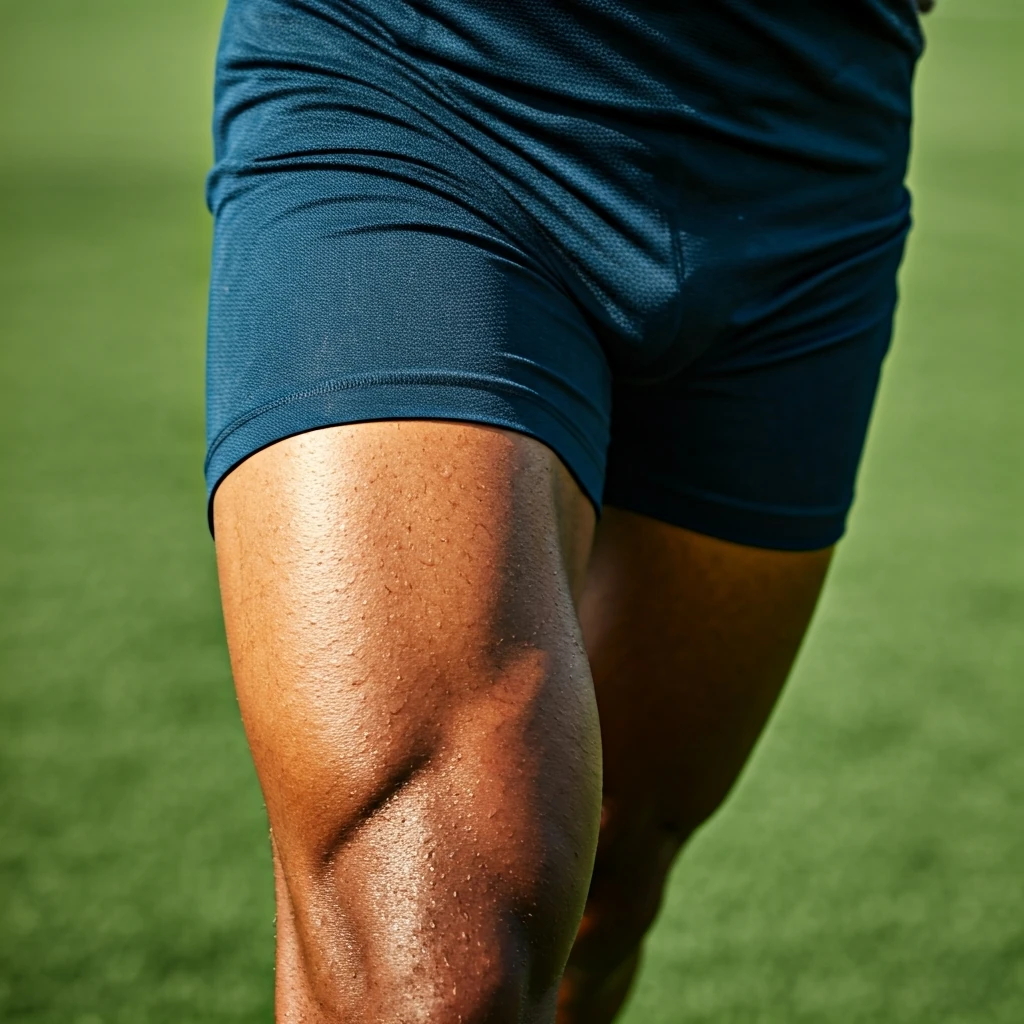
Strong legs are the engine of any player, determining shot power, acceleration, and the ability to win physical duels. A well-structured Strength Training for Soccer program focuses on exercises like squats, lunges, and deadlifts, which work the quadriceps, hamstrings, and glutes together. Balance between these muscle groups is vital for knee stability in soccer, since the knee is one of the most vulnerable joints.
Neglecting the hamstrings in favor of the quadriceps is a classic and dangerous mistake. That strength imbalance dramatically increases the risk of strains and even more serious anterior cruciate ligament (ACL) injuries. Proper periodization of strength training for players ensures that strength is built without overloading the athlete and undermining their performance.
Why the Core Matters for Stability and Prevention
Your “core” is much more than a set of abs to show off. It’s your body’s command center, the bridge connecting your lower and upper body, ensuring force transfer and stability in every movement. A weak core leads to compensations, overloading the lower back and knees, which pay the price for that central weakness.
Every athletic movement, from a powerful shot to a leap for a header, originates in or passes through the core. Ignoring this area is like building a skyscraper on a foundation of sand. The resulting instability is an open invitation to sprains, chronic pain, and a steep drop in performance on the field.
Essential Core Exercises
To armor your body, include routines that challenge your stability from different angles. Some exercises are indispensable and can be done with just your body weight, eliminating any excuse not to do them.
- Plank (front and side): Works isometric stabilization of the entire torso, building muscular endurance.
- Glute bridge: Activates the entire posterior chain (glutes and hamstrings), essential for power in running and jumping.
- Bird-dog: Challenges balance and coordination, strengthening the deep back muscles that protect the spine.
- Russian Twist: Targets the obliques, which are essential for rotational torso movements like shooting and passing.
Proprioceptive Training: Balance and Coordination
Proprioception is, simply put, your body’s ability to know where it is in space, even with your eyes closed. In soccer, that translates into safe landings after a jump, quick reactions to a dribble, and preventing ankle sprains. This training “teaches” your muscles and joints to react more quickly and efficiently to sudden instability.
Exercises like standing on one foot, using balance boards, or doing squats on unstable surfaces are excellent for this purpose. Incorporating these stimuli into your training refines fine motor control and communication between the brain and muscles. It’s the crucial difference between an ankle that rolls and one that stabilizes in time to avoid injury.
Nutrition and Hydration: Fuel for a Resilient Body
Think of your plate as the most underrated piece of your training kit. Proper nutrition for soccer doesn’t just provide energy; it supplies the building blocks for repairing muscles and strengthening tissue. Ignoring your diet is like building a house with low-quality materials and expecting it to withstand a storm.
Hydration for athletes is equally critical and often neglected. A dehydrated body means muscles that tire faster, cramps, and slower reaction times, the perfect recipe for a muscle injury. Drinking water isn’t optional; it’s an essential part of your prevention regimen, ensuring your bodily functions operate at maximum efficiency.
A well-structured diet for players amplifies the results of everything else, from your Strength Training for Soccer to essential Post-Game Soccer Recovery. The right fuel ensures your body recovers faster and is ready for the next battle, making it a pillar as important as physical and mental preparation. Supplementation for prevention can be a tool, but the foundation will always be what’s on your plate.
The Role of Rest and Recovery in Athlete Health
Train until you drop? Terrible idea. Rest for soccer players is the new secret weapon. The “more is always better” mindset is outdated and a direct path to the treatment room. Ignoring the signs of fatigue doesn’t make you stronger, just more prone to injuries that can end a season.
Recovery isn’t a luxury; it’s a fundamental part of training. It’s during rest that the body rebuilds, muscle fibers repair, and the mind rebalances. Without proper muscle recovery in soccer, the athlete enters a vicious cycle of wear and tear, culminating in dreaded overtraining and stress injuries.
Active and Passive Recovery Strategies
Recovery techniques fall into two main groups: active and passive. Active recovery involves low-intensity activities, like light walks, cycling, or stretching sessions, which help increase blood flow and clear metabolic byproducts from the muscles. This approach is a crucial part of any Post-Game Soccer Recovery plan, speeding up the return to an optimal state.
Passive recovery, on the other hand, is equally vital. This is where the superpower of sleep for players comes in, the time when the body releases growth hormones to repair tissue. In addition to quality sleep, techniques like cryotherapy, massage, and complete days off are essential to let the nervous and muscular systems fully reset.
Managing Training and Game Load
Preventing overtraining starts with smart workload management. That means periodizing training, alternating high-intensity weeks with lower-volume, lower-intensity periods to allow for supercompensation. Coaches and athletes need to work together to monitor load, using wellness metrics and perceived exertion.
Too many games and training sessions without proper rest lead to physical and mental burnout, a topic often addressed in Sports Psychology in Soccer. Listening to your own body is a skill that needs to be developed. A balanced program that combines Strength Training for Soccer sessions with adequate rest is the key to keeping performance high and the body free of injury.
Protective Gear and Playing Surfaces
Your gear can be your best friend or your worst enemy on the field. Thinking any cleats or shin guards will do is the fastest way to the bench, and not by the coach’s choice. Smart selection of soccer protective gear and attention to the surface you play on are decisive factors in your longevity as an athlete.
Many players underestimate how what they wear interacts with the playing environment. The wrong cleats on a poorly maintained field are a recipe for disaster, turning talent into an injury statistic. So understanding this relationship is as fundamental as knowing how to kick the ball.
Choosing Your Cleats Wisely
Cleats are your direct connection to the field, and ignoring a perfect fit is a rookie mistake. The ideal model should match the shape of your foot, offer proper arch support, and leave enough room for your toes, preventing blisters, ingrown toenails, and even stress fractures. The right cleats aren’t about brand or color, but about function and comfort.
Trying on different models and knowing whether your foot is wide or narrow makes all the difference. Footwear that’s too tight restricts circulation and causes discomfort, while footwear that’s too loose reduces stability and increases the risk of ankle sprains. The right choice provides the confidence you need, a topic also explored in Sports Psychology in Soccer.
How the Soleplate Affects Injury Prevention
The soleplate is perhaps the most critical component for preventing knee injuries and ankle injuries. Studs that are wrong for the type of field can lock your foot into the ground during a change of direction, generating devastating rotational force on the joints. It’s essential to match the type of stud to the surface to ensure traction without excessive locking.
Soleplates for firm natural grass (Firm Ground – FG) have studs that provide grip, while those for artificial turf (Artificial Grass – AG) are designed to slide a bit more, keeping the foot from getting stuck. Wearing metal soft-ground studs (Soft Ground – SG) on a dry or artificial field is an invitation to serious injury, making soleplate selection must-have knowledge for any serious player.
Shin Guards and Other Essential Protection
Forget the idea that shin guards are optional or uncomfortable. They’re a fundamental barrier against direct impacts that can cause anything from painful bruises to tibia fractures. Modern models are lightweight, anatomically shaped, and made with highly shock-absorbing materials, like carbon fiber or advanced polymers, offering maximum protection with minimal discomfort.
Beyond shin guards, other items may be important depending on the athlete’s position and history. Mouthguards, common in other sports, are starting to gain ground to prevent dental injuries and concussions. For goalkeepers or players returning from injury, shorts and jerseys with strategic padding also add an extra layer of safety.
The Influence of the Playing Surface (Natural Grass vs. Artificial Turf)
The natural grass versus artificial turf debate is a long one, but the focus should be on the condition of a safe playing surface. A well-maintained natural field with good drainage and no holes offers excellent shock absorption. However, a poor natural field, uneven and hard, can be much more dangerous than a high-quality artificial one.
Modern artificial turf has evolved a lot, with cushioning systems that reduce impact on the joints. The problem is that it tends to generate more friction and heat, and traction can be excessive if the player doesn’t wear the right cleats. Adapting the body to harder surfaces requires good Strength Training for Soccer and extra attention to Post-Game Soccer Recovery to mitigate the accumulated stress.
Psychological Aspects and Injury Prevention
The most dangerous injury isn’t always visible; it starts in your head. A player’s mental state is a determining factor in avoiding injuries, directly influencing how the body reacts under pressure. Ignoring soccer sports psychology leaves the door open to physical problems that could have been avoided.
The Impact of Stress and Mental Fatigue
A stressed player takes the field with a tense body and an overloaded mind. Athlete stress, whether from pressure for results or personal problems, increases muscle stiffness and slows reaction time. That combination is a recipe for disaster, leaving the athlete vulnerable to sprains, strains, and poor decisions in crucial moments.
Mental fatigue is just as dangerous, because it affects concentration and decision-making. A tired brain makes mistakes a rested brain wouldn’t, like misjudging a jump or a tackle. Keeping your mind sharp is as vital as physical condition, and a proper High-Performance Athlete Diet also plays a role in fueling the brain.
Techniques to Improve Focus and Resilience
To armor the mind, elite athletes use specific techniques to manage pressure. Tools like visualization, where you imagine executing plays perfectly, and controlled breathing exercises are essential for calming pre-injury anxiety and staying focused on the present. These practices improve body awareness and the ability to anticipate.
Developing mental resilience is another fundamental pillar, and this is where Sports Psychology in Soccer becomes indispensable. It’s about the ability to get over a mistake quickly, without letting it affect the rest of the game. Unshakable mental focus in soccer allows the player to maintain motor control and technical precision, even in the most adverse moments of the match.
Conclusion: An Ongoing Commitment to Athlete Health
Being fully fit for the game isn’t luck; it’s a daily commitment. Soccer injury prevention goes far beyond warming up before the opening whistle; it’s an ongoing process that defines careers. It’s the sum of smart decisions made on and off the field, turning preparation into a true lifestyle for the modern athlete.
This journey requires a combination of strategies to shield the body against wear and tear. A robust Strength Training for Soccer program and a rigorous High-Performance Athlete Diet are key pieces of this puzzle. Neglecting these pillars, in practice, leaves the door open to injuries that could be completely avoided with proper attention.
Body and mind play on the same team, and true player health depends on that fine-tuned harmony. Effective Post-Game Soccer Recovery isn’t a luxury, but an absolute necessity for sustaining high performance. Likewise, the resilience built through Sports Psychology in Soccer ensures your head is as strong as your muscles when it’s time to decide.
At the end of the day, the biggest trophy a player can lift is a long, productive, healthy career. Taking responsibility for your own preparation is the smartest play any dedicated athlete can make, ensuring they stay on the field for much longer.
Making Prevention Part of Your Daily Routine: Play Longer
We’ve reached the end of this guide, but for you, as an athlete or coach, this is just the beginning of a more mindful and lasting journey in soccer. Injury prevention isn’t a set of tasks to be done every now and then, but a philosophy to be built into every aspect of your preparation. From what you eat to how you rest, every choice contributes to building a stronger, more resilient body.
Remember that consistency beats intensity. A well-done warm-up every day is more valuable than an occasional strength session. Listening to your body’s signals is more important than following a training plan to the letter when fatigue sets in. By adopting the strengthening, nutrition, recovery, and gear-selection strategies discussed here, you’re not just avoiding a trip to the physical therapist; you’re investing in your longevity, your performance, and, above all, the pleasure of continuing to play the sport you love, without limitations.
Frequently Asked Questions About Soccer Injury Prevention
What are the most common injuries soccer players suffer?
The most frequent injuries are muscular, like strains and tears in the hamstrings, quadriceps, and calves. Next come joint injuries, mainly ankle sprains and knee ligament injuries, like an Anterior Cruciate Ligament (ACL) tear.
How often should I stretch to prevent injuries?
Ideally, you should build two types of stretching into your routine. Dynamic stretching, with movements that mimic the game, should always be done before practices and matches as part of the warm-up. Static stretching, holding positions for 20-30 seconds, is more beneficial after activity, during the cool-down, to help with muscle relaxation and recovery.
Does nutrition really affect my chances of getting injured?
Yes, absolutely. Proper nutrition provides the energy needed for performance and the essential nutrients to repair the muscle micro-tears that occur during exercise. In addition, proper hydration is crucial, since dehydration leads to early fatigue, cramps, and reduced coordination, significantly increasing the risk of injury.
What’s the difference between a dynamic and a static warm-up for soccer?
A dynamic warm-up involves continuous movements that prepare the body for activity, raising body temperature and activating soccer-specific muscles. A static warm-up consists of holding a stretch position for a period of time and is better suited to the cool-down, since it helps relax the muscles and restore flexibility after exertion.
How can I tell if I’m at risk of overtraining?
Watch for signs like persistent fatigue, declining performance, muscle soreness that doesn’t improve, irritability, and trouble sleeping. Overtraining occurs when training volume and intensity exceed the body’s capacity to recover. Monitoring your workload and ensuring adequate rest periods is the best form of prevention.
Is there any difference in injury prevention between 11-a-side soccer and 7-a-side turf soccer?
Yes, the surface is a key factor. The artificial turf used for 7-a-side (known in Brazil as “society”) usually creates more friction, which can increase rotational stress on the knees and ankles. That’s why it’s essential to wear cleats with studs designed for artificial grass (AG). In addition, 7-a-side games are faster, with more changes of direction, requiring an even greater focus on strengthening and proprioception.