Anúncios
You’re watching a match and hear the commentator praise the movement of a “false 9” or the omnipresence of a “box-to-box” midfielder, but you’re not sure what those terms really mean? Soccer is much more than twenty-two players chasing a ball; it’s a complex chess game played on grass, where every piece has a vital role that can decide the outcome of a championship.
Long gone are the days when positions were rigidly defined as defense, midfield and attack. Tactical evolution has transformed the sport, requiring every athlete to master a specific set of skills for their role. Understanding the role of an overlapping fullback, a center back who builds play or a goalkeeper who acts as a sweeper is fundamental to appreciating the strategic depth behind every match and understanding a coach’s decisions.
Anúncios
This complete guide was created to demystify positioning in modern soccer once and for all. We’ll dive into each area of the field, explaining in detail the responsibilities of the goalkeeper, defenders, midfielders and forwards. We’ll also show how these positions interconnect in famous tactical formations, such as the 4-4-2 and the 4-3-3, so you can watch your next game not just as a fan, but as a true tactical analyst.
Tactical Evolution and the Importance of Positioning
Position on the field is everything. Modern soccer is chess played at top speed, where individual talent only shines within a well-defined structure. Tactical evolution isn’t just a detail for scholars; it’s the force that transformed the sport, dictating who wins and who falls by the wayside.
Anúncios
In the beginning, the game was more instinct than strategy, with formations that seem chaotic today. Over time, organization became the key to victory, a process that can be seen in detail in the history of soccer tactics. Understanding that past is essential to deciphering why each player occupies a specific space on the field today.
Today, each position has a set of on-field roles that defines the flow of the game, from defense to attack. Analyzing tactical formations in soccer reveals how the great teams exploit every inch of the pitch, with the coach acting as a conductor. Ignoring the importance of positioning is ignoring the very essence of the team game.
Guarding the Goal: The Art and Science of the Modern Goalkeeper
Think the goalkeeper is only there to make saves? Think again. The era of the keeper who just stood between the posts is over, giving way to the modern goalkeeper, a key piece who influences the game from defense all the way to building the attack. He’s no longer just the last line of defense, but the team’s first playmaker.
This transformation demands a set of skills far beyond sharp reflexes. Today’s goalkeeper needs vision, the courage to come off his line and, above all, quality passing with his feet. He has become an outfield player with gloves, a true hybrid athlete.
Positioning Techniques and Playing Out from the Back
Goalkeeper positioning goes far beyond standing in the middle of the goal. It’s a constant reading of the game to cover the widest possible angle against the shooter, anticipate crosses and be ready to intercept long balls. The sweeper role, operating outside the six-yard box, demands perfect timing and a deep understanding of opponents’ movements, turning potential scoring chances into mere scares.
The Goalkeeper’s Influence on Tactical Build-Up
The ability to play with the feet has completely changed soccer. A goalkeeper who is good at playing out from the back offers a safe passing option under pressure, breaking the opponent’s first line of pressure. This allows the team to start attacks in a controlled way and with more quality from its own half, easing the burden on the center backs.
This tactical evolution is one of the pillars of today’s game, directly impacting the Analysis of Tactical Formations in Soccer. The goalkeeper becomes part of possession, creating numerical superiority and forcing opponents to rethink their pressing strategies. The sweeper-keeper isn’t a luxury, but a tactical necessity for teams that aspire to dominate the game.
| Position | Main Role | Key Traits |
|---|---|---|
| Goalkeeper | Defend the goal and start building plays. | Reflexes, positioning, footwork, leadership. |
| Center Back | Mark forwards, protect the box and start the build-up. | Strength, anticipation, good passing, reading the game. |
| Fullback | Defend the flanks and support the attack, providing width. | Speed, stamina, crossing ability, marking. |
| Defensive Midfielder | Protect the defense, win the ball and handle transitions. | Marking, positioning, ball distribution, stamina. |
| Midfielder | Create attacking plays, provide assists and finish. | Vision, creativity, quality passing, dribbling. |
| Forward | Finish plays and score goals. | Finishing, speed, positioning in the box, dribbling. |
The Defensive Wall: Center Backs and Fullbacks in the Tactical System
Forget the idea that defense only destroys. In today’s game, the back line is where the attack begins, turning bruisers into maestros. The organization of a soccer defense is the backbone of any winning team, setting the tempo and intent from the first seconds of possession.
Center Backs: Pillar of the Defense and Start of the Build-Up
Center backs are no longer just specialists in slide tackles and headers. They are the first point of build-up, responsible for breaking the opponent’s press with precise passes. This functional evolution is a fundamental tactical guideline, where vision becomes as important as physical strength for dismantling rival defensive systems.
Central Defender: Reading the Game and Providing Cover
The classic central defender is the brain of the back line, a master of anticipation and positioning. His main job is relentless marking of the opposing striker, as well as commanding the offside line and providing cover for his teammates. He needs to read the play before it happens, intercepting passes and neutralizing threats with tactical intelligence, not just brute force.
Libero Center Back: Betting on Quality Build-Up
A role that harks back to The History of Soccer Tactics, the modern libero is a center back with the soul of a midfielder. Operating with more freedom, he carries the ball forward to start attacks and create numerical superiority in midfield. Betting on a libero shows a team’s intention to dominate possession and build play from the very back, requiring Skills Training for Each Position that refines both defending and passing.
Fullbacks: Balancing Attack and Defense
Fullbacks are the most versatile athletes on the field, true engines who cover the flank from end to end. The role demands a perfect balance between closing down space in defense and providing width and depth in attack. It’s a position of sacrifice and intelligence, where knowing when to push up and when to track back is what separates good players from stars.
Attacking Fullback: Importance in the Final Third
In attack, the overlapping fullback, or wingback, works as an extra winger and is crucial in modern Analysis of Tactical Formations in Soccer. He is responsible for delivering crosses, playing one-twos and even shooting on goal, overloading the opposing defense. This attacking vocation turns the fullback into an unexpected weapon, capable of unlocking defenses crowded through the middle and generating clear scoring chances.
The Heart of the Team: Midfield and Its Many Faces
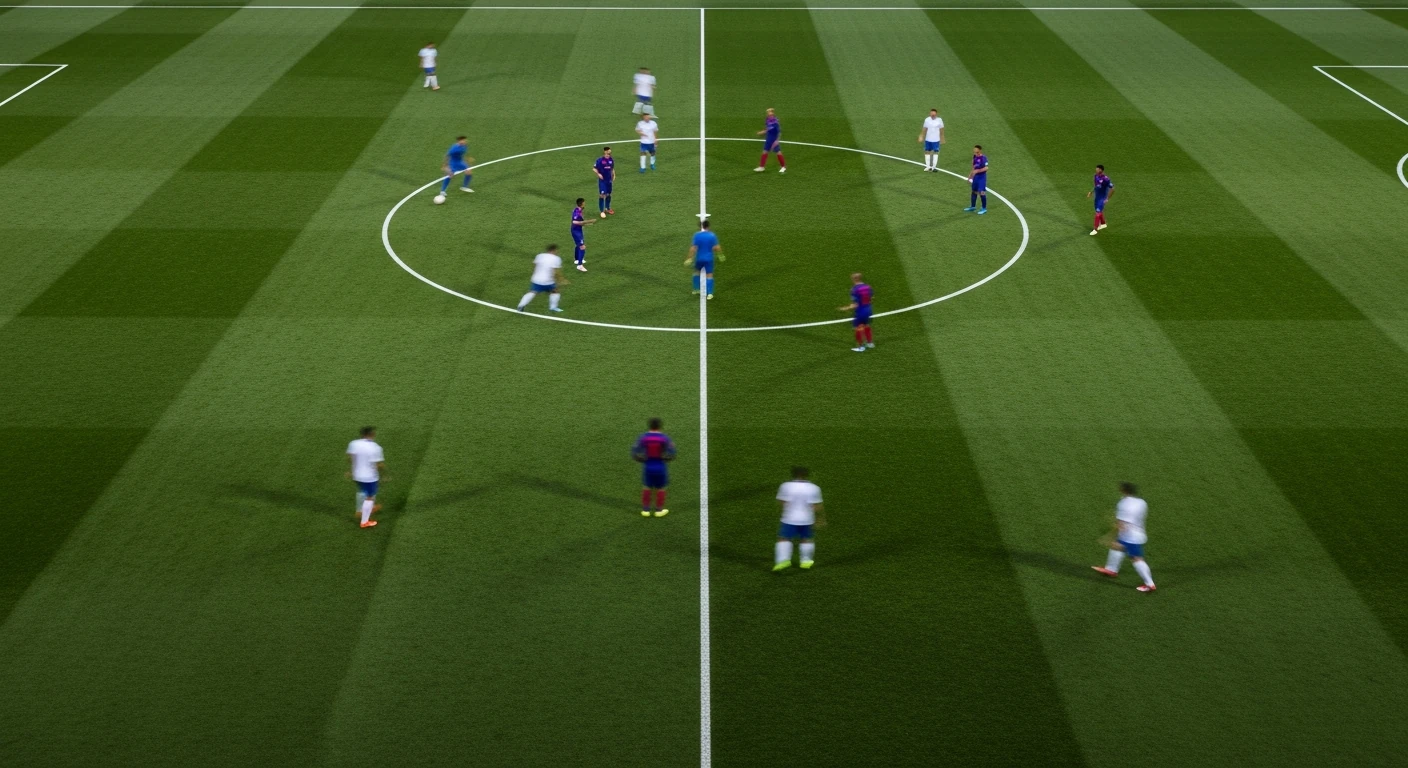
Forget the forwards for a second. The real game is decided here. The midfield is the engine of any team, the zone of the field where battles are won, the tempo is set and the team’s identity is forged. It’s the bridge between defense and attack, responsible for controlling the game and tactical balance.
No other area has so many variations and specialized roles. From the guard dog protecting the back line to the maestro conducting the attack, midfielders are the most versatile and tactically intelligent players. Understanding their roles is essential to deciphering how a team really works on the field.
Defensive Midfielders: Shielding the Back Line and Defensive Transition
Known as the shield of the defense, defensive midfielders are the first line of containment when the team loses the ball. Their main mission is to break up the opponent’s rhythm, win the ball and close down space in front of the box. In modern soccer, however, their role goes beyond just destroying; they are crucial for starting the build-up with quality.
Holding Midfielder: The Play Breaker
This is the marking specialist, the classic anchor in front of the box. The holding midfielder sits in front of the center backs with the primary mission of intercepting passes, making tackles and protecting the defense at all costs. He rarely ventures forward, focusing on doing the dirty work and giving the ball simply to a more creative teammate to start the play.
Second Defensive Midfielder: Starting the Build-Up and Getting Forward
Here we have the modern player, often called box-to-box for his ability to operate from one penalty area to the other. The second defensive midfielder has more freedom to advance, actively participating in building plays and showing up as a surprise element in attack. He combines strength in marking with quality passing and vision, making him a vital piece in the attacking transition and a direct reflection of the Analysis of Tactical Formations in Soccer adopted by the coach.
Attacking Midfielders: Creativity and the Link to the Attack
If the defensive midfielders are the muscle, the attacking midfielders are the team’s brain. They operate in a more advanced area of the field, with the responsibility of creating scoring chances and providing the final link to the forwards. It’s from these players’ feet that the line-breaking passes and moments of genius are born.
Playmaker (No. 10): The Team’s Brain
The playmaker, the classic No. 10, is the conductor of the orchestra. His main weapon is vision, the ability to find passes nobody else sees and to dictate the tempo of attacking play. Although the role has evolved, as detailed in The History of Soccer Tactics, the playmaker remains the creative reference point, the one who thinks the game through and puts the forwards through on goal.
Attacking Midfielder: Late Runs and Finishing
Unlike the classic playmaker, the attacking midfielder is more aggressive and direct, working almost as a second striker. His specialty is moving between the opponent’s midfield line and defense, finding space to receive the ball and go for goal. This player is lethal because of his ability to make late runs and be a constant scoring threat, whether with shots from mid-range or arriving unmarked inside the box.
The Tip of the Spear: Forwards and the Hunt for Goals
They live to hit the back of the net. Meet the field’s finishers. Forwards are the finishing specialists, the players whose main mission is to put the ball into the opponent’s goal. Whether through strength, speed or intelligence, their traits define a team’s firepower and adapt to different attacking strategies.
Striker: Target Man and Finishing Power
The striker is the classic “box man,” the team’s attacking reference point. Usually physically strong and with excellent positioning, he plays centrally, battling with center backs, holding the ball up for teammates and, above all, being lethal inside the six-yard box. His heading ability and one- or two-touch finishing make him a constant threat on crosses and set pieces.
Wingers and Wide Forwards: Speed and Dribbling on the Edge of the Field
Unlike the striker, wingers or wide forwards play out on the flanks, using speed and dribbling as their main weapons. Their job is to break defensive lines, either by getting to the byline to cross or by cutting inside to shoot. These players are responsible for giving the team width, stretching the opposing defense and creating space for teammates arriving from behind.
A modern tactical variation that turns these positions upside down is the false 9. This player, who wears the No. 9 but doesn’t play as a fixed striker, drops back into midfield, drawing the center backs out and opening up vital space behind them. This intelligent movement allows wingers and midfielders to make runs in behind, completely disorganizing the opponent’s defensive structure and creating unexpected scoring chances.
Tactical Dynamics: How Positions Adapt
Tactical rigidity is dead. Modern soccer is about constant, intelligent movement. The tactical formations drawn up on the whiteboard are just the starting point, because on the field, tactical dynamics set the pace and create the real opportunities to break down the opposing defense. It’s the swapping of positions that confuses markers and generates numerical superiority in key areas of the pitch.
This tactical fluidity shows up in several ways during a match. A winger may cut inside while the fullback overlaps down the flank, or a defensive midfielder may ghost into the box as a surprise element. These changes of position aren’t random; they are coordinated movements aimed at disorganizing the opponent’s defensive structure and exploiting the spaces left behind.
For this machinery to work, players need a lot of training and tactical intelligence. Communication and understanding among the athletes are essential so that cover is provided and the team isn’t left exposed. It therefore becomes clear what The Coach’s Role in Tactical Organization is: the great architect behind these complex movements, something a good Analysis of Tactical Formations in Soccer can break down.
Practical Examples: Positions in Famous Formations
Forget fixed positions. In modern soccer, the tactical formation rules. A player’s role can change drastically depending on the team’s shape on the field, proof that the Analysis of Tactical Formations in Soccer is essential to understanding the game. A fullback in a back four is not the same as a wingback in a back five, and that’s where a team’s genius or failure is revealed.
The positions we listed earlier are just the starting point. Now, let’s see how they fit into some of the best-known systems. Each formation prioritizes an area of the field and demands different traits from the players, determining whether the team will be a defensive wall or an attacking machine.
The Classic 4-4-2: Balance and Compactness
Ah, the 4-4-2. If you’ve ever played pickup soccer, you’ve probably lined your team up this way. With two well-defined banks of four and two forwards, this formation seeks the perfect balance between defense and attack. It’s a system that values compactness, making it hard for the opponent to create plays through the middle and forcing the game out to the flanks.
Its simplicity is its greatest strength, allowing players to quickly understand their responsibilities. When well executed, the team moves as a single block, pushing up and dropping back in harmony. It’s no accident that this formation has a special place in The History of Soccer Tactics as one of the most resilient and effective.
Key Roles in the 4-4-2 Midfield
The heart of the 4-4-2 beats in its midfield. Usually, the central midfield pair is split: one more focused on marking and the other with more freedom to join the attack. On the flanks of midfield, the wide midfielders need incredible stamina, since they’re responsible for supporting the attack and, crucially, dropping back to re-form the line of four in defense, creating a solid wall.
The Attacking 4-3-3: Pressing and Width
Want to suffocate your opponent and attack nonstop? The 4-3-3 is your weapon. Popularized by teams that love to keep possession and press high up the field, this formation uses three forwards to stretch the opposing defense and create space. It’s the preferred formation for modern soccer tactics built on high pressing and quick transitions.
The midfield trio is vital to how it works. Normally, a more stationary defensive midfielder (the “pivot”) shields the back line, while the other two midfielders (the “interiors” or “eights”) have freedom to press, make runs into the box and dictate the tempo of the game. It’s a formation that demands a lot of intensity and coordination.
The Importance of Wingers in the 4-3-3
In the 4-3-3, the wingers are the stars of the show. They’re not mere crossers; they’re finishers. Playing on their opposite foot (a right-footer on the left, a left-footer on the right), they are encouraged to cut inside and shoot, becoming a constant threat. The width they provide is essential for breaking down deep-lying defensive lines.
The Flexible 3-5-2: Midfield Dominance and Attacking Wingbacks
The 3-5-2 is a complex and highly flexible tactical system. With three center backs, the defense gets numerical reinforcement against strike partnerships. The big difference lies in midfield, where five players create a superiority aimed at dominating possession and controlling the center of the field.
The key to the 3-5-2’s success lies in the wingbacks. These players need to be true athletes, since they’re responsible for the entire flank, defending like a fullback and attacking like a winger. Without high-quality wingbacks and good Skills Training for Each Position, the formation simply doesn’t work, because the team loses the width it needs. Choosing to use this complex system clearly shows The Coach’s Role in Tactical Organization.
Beyond Position: Tactical Intelligence and Reading the Game
Position on paper is a thing of the past; the brain is what rules. Modern soccer has left behind the rigidity of fixed positions, and what defines an elite player isn’t just where he starts the play, but his ability to understand what’s happening around him. Tactical intelligence is the secret weapon that allows an athlete to always be one step ahead, anticipating movements and creating opportunities.
This ability to read the game turns ordinary players into key pieces for any team. Knowing when to press, when to drop off, where to find open space or how to break the opposing defensive line are qualities that transcend any position. It’s the difference between a player who follows instructions and one who dictates the tempo of the match, directly influencing the Analysis of Tactical Formations in Soccer in real time.
Versatility as a Differentiator in Today’s Game
A player who can fill several roles is pure gold for a coach. This player versatility allows tactical changes during the game without the need for substitutions, confusing the opponent and creating new attacking or defensive dynamics. Players like “false 9s” or fullbacks who become midfielders are clear examples of this trend, showing a remarkable evolution in The History of Soccer Tactics.
This adaptability doesn’t happen by chance; it’s polished through a lot of training and study. The athlete needs a deep understanding of the different roles on the field, something that goes far beyond simple Skills Training for Each Position. It’s about understanding the principles of the game and applying them in different contexts, which reinforces The Coach’s Role in Tactical Organization in developing these talents.
Quick Decision-Making and Adaptation
In a high-speed sport, thinking fast is as crucial as running fast. Decision-making in fractions of a second determines the fate of a play, whether it’s a precise pass, an unexpected dribble or a well-timed tackle. The best players process a huge amount of information and choose the best option almost instinctively, changing the course of the contest.
This mental agility allows the player to constantly adapt to the circumstances of the match. If the initial plan isn’t working, tactical intelligence kicks in to find new solutions on the field. It’s the ability to improvise based on an accurate reading of the game that separates good players from the true stars who decide championships.
Mastering the Game: Tactical Knowledge Is the Key
We’ve reached the end of our guide, but the beginning of a new way of seeing soccer. Understanding the positions and their tactical roles transforms the experience of watching a match, revealing the complexity and strategic beauty that often go unnoticed. Every movement, every change of position and every instruction from the coach is part of a larger machine, designed to outwit the opponent in the chess game played on the field. Soccer is constantly evolving, and with this knowledge, you’re more than ready to follow the next tactical innovations that will define future champions.
Frequently Asked Questions About Soccer Positions
What is the difference between a defensive midfielder and a playmaker?
The main difference lies in their primary role. The defensive midfielder is a containment player, focused on protecting the defense, winning the ball and starting the transition, while the playmaker is the team’s creative brain, responsible for creating scoring chances with passes, dribbles and vision.
Can a player play in more than one position?
Yes, versatility is a highly valued trait in modern soccer. Many players are trained to adapt to different tactical roles depending on the team’s needs, such as a fullback who can play as a winger or a center back who plays as a defensive midfielder.
What are the main traits of a good center back?
A good modern center back combines physical strength and presence with tactical intelligence. Essential traits include excellent positioning, timing in the tackle, good leaping ability, leadership to organize the defense and, increasingly, quality passing to start plays.
How does technology impact player positioning on the field?
Technology, such as GPS systems and data analysis, has revolutionized positioning. Coaches use these tools to monitor each player’s distance covered, speed and heat maps, optimizing field coverage, preventing injuries and adjusting tactics in real time.
What is the hardest position to play in soccer?
It’s a subjective question, but positions such as the modern goalkeeper and the ‘box-to-box’ midfielder are often cited. Both require a complex combination of technical, physical, mental and tactical skills, demanding that the player be complete in every aspect of the game.
What does ‘false 9’ mean?
The ‘false 9’ is a forward who, instead of staying fixed between the center backs, drops back into midfield to take part in building plays. This movement confuses the opposing markers, dragging a defender out of position and opening up space for midfielders and wingers to run into.
How important is communication between players for positioning?
Communication is absolutely vital. It ensures the back line moves in a coordinated way to play an offside trap, adjusts marking during the press and makes sure position swaps are covered. Without clear communication, a team’s tactical structure can easily fall apart.