Anúncios
From the roar of the crowd to the final whistle, soccer is a universal language that connects billions of people. It’s the sport of passion, of the unexpected dribble and the last-minute goal. However, behind every spectacular play and every celebration lies a complex structure of rules that many fans know only superficially. How many times has a refereeing decision sparked a heated debate among friends without anyone being absolutely sure about the rule?
Understanding soccer goes far beyond knowing what a goal or a foul is. The rules are the grammar of the game, defining everything from the dimensions of the field to the controversial application of offside. Elements such as the indirect free kick, the criteria for a yellow card and the intervention of VAR (Video Assistant Referee) are fundamental to the dynamics of a match, but they often become sources of confusion and controversy. This in-depth knowledge transforms the experience of watching a game, allowing for a more tactical and critical analysis.
Anúncios
This complete guide was created to demystify the world’s most beloved sport. Here, you’ll find a clear, detailed explanation of every essential aspect of the game. We’ll explore the field and its markings, the role of each player on the field, the rules for starting and restarting play, what constitutes an offense, the role of the referees and the most common tactical formations. By the end, you won’t just be a fan, but a true connoisseur of soccer’s rules and fundamentals, ready to appreciate every match with fresh eyes.
The Field of Play and Its Essential Elements
The pitch is much more than a simple green carpet; it’s the stage for every glory. An official soccer field is a rectangle whose dimensions can vary, but it generally measures between 90 and 120 meters long by 45 to 90 meters wide. This variation in size directly influences how teams set up, making it a crucial factor in Modern Soccer Tactics.
Anúncios
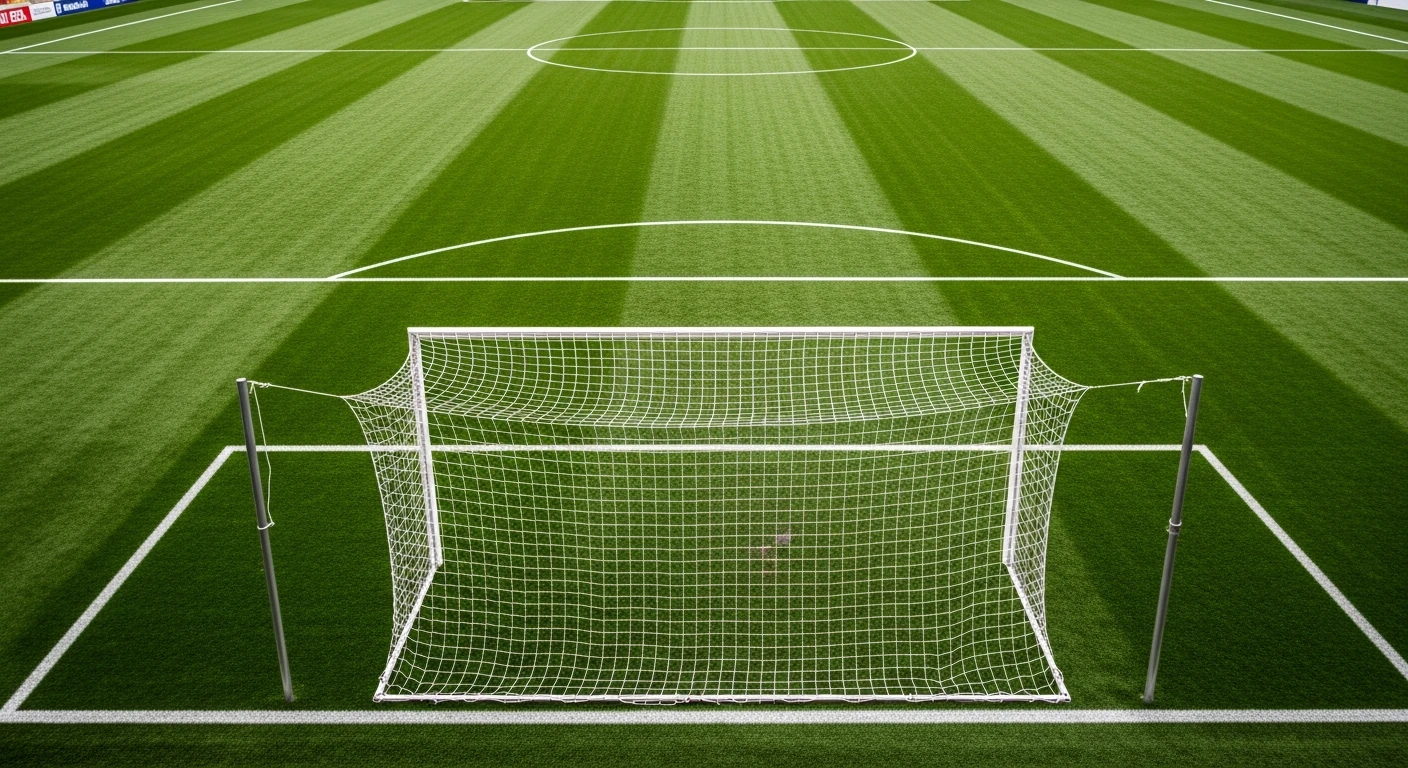
The white lines, or field markings, set out the rules of the game without needing words. The halfway line divides the territory, while the center circle ensures the correct space at the start of the match. The hottest areas are the penalty area, where penalties are awarded and goalkeepers may use their hands, and the goal area, which protects the keeper on aerial balls.
At each end, the goals represent the ultimate objective of the match, the sacred place where the ball must go in for the score to change. At 7.32 meters wide by 2.44 meters high, they are the target of all the players’ genius and effort. The arcs in the corners of the field define where corner kicks are taken from, creating decisive attacking opportunities.
The Players and Their Roles: Understanding the Positions
A team isn’t just a bunch of people chasing a ball. Each of the eleven players on the field has a specific mission, a role that defines the tempo and strategy of the match. Soccer positions are divided into defense, midfield and attack, but the lines between them are increasingly fluid, a hallmark of Modern Soccer Tactics.
The Importance of the Goalkeeper and Defenders
The goalkeeper is the guardian, the only player who can use his hands inside the penalty area to defend his goal. Under immense pressure, he needs incredible reflexes and the courage to come off his line and intercept plays. Agility and mental strength are as crucial as good Physical Conditioning for Soccer Players.
Right in front of him are the defenders, such as the center backs and fullbacks. The center backs form the central barrier, responsible for dispossessing opposing forwards and clearing danger with strength and positioning. The fullbacks protect the flanks of the field, but they also have the job of supporting the attack, pushing up to cross balls into the opponent’s box.
Creativity and Control in Midfield
The midfield is the team’s engine, the link between defense and attack. These players are responsible for controlling possession, dictating the tempo of the game and creating scoring chances. A good midfielder combines vision, passing accuracy and the stamina to cover long distances on the pitch.
Up front, the forward has the most celebrated mission: scoring goals. Whether a strong striker who battles with the center backs or a speedy winger who dribbles and opens up space, his ultimate goal is to put the ball in the net. The History of Brazilian Soccer is full of legendary forwards who became icons for their ability to deliver in front of goal.
| Fundamental Concept | Brief Description |
|---|---|
| Offside | A player is in an offside position if he is nearer to the opponent’s goal line than both the ball and the second-to-last defender at the moment of the pass. |
| Penalty Kick | The maximum sanction, awarded for a foul committed by the defending team inside its own penalty area. |
| Corner Kick | A set piece taken from the corner of the field, awarded when the defending team is the last to touch the ball before it goes out over the goal line. |
| Direct Free Kick | Allows a shot straight at goal without the ball having to touch another player. Awarded for contact fouls or handballs. |
| VAR (Video Assistant Referee) | Technology that helps the on-field referees review key incidents, such as goals, penalties and straight red cards. |
Starting and Restarting Play: Kickoffs and Set Pieces
The ball doesn’t roll on talent alone; it follows rules for stopping and starting again. The kickoff starts the match from the center circle and also restarts play after a goal. The rule is clear: all players must be in their own half and the ball must move before another teammate can touch it.
When the ball goes out over the field’s lines, play restarts in specific ways. If it crosses the touchline, it’s put back into play with a throw-in using the hands. If the attacking team kicks it out over the goal line, a goal kick is awarded. And if a defender deflects the ball over his own goal line, the opposing team wins a corner kick.
Fouls result in a free kick, which can be direct, allowing a shot on goal, or indirect, requiring another touch before a shot. Many Modern Soccer Tactics focus on getting the most out of these set pieces. Mastering these moments is essential for controlling the tempo of a match and creating decisive scoring chances.
Offenses and Sanctions: Fouls, Offside and Cards
Did the ref blow the whistle? Crack the trinity that decides games and drives fans crazy. Offenses are the controversial seasoning of soccer, marking the line between a fair challenge and aggression. Understanding soccer fouls, offside and cards is essential to understanding why a match can change course in a single second.
Unpacking the Offside Rule
The offside rule is the nightmare of many forwards and the cause of countless bar debates. Put simply, a player is in an offside position if he is nearer to the opponent’s goal line than both the ball and the second-to-last defender at the moment the ball is played to him by a teammate. The goalkeeper counts as one of those defenders, so in practice the player needs to have at least two opponents level with or ahead of him.
The rule doesn’t apply if the player receives the ball directly from a goal kick, throw-in or corner kick. The complexity increases because the referee should only call the offense if the player in the offside position is actively involved in the play. Many teams use the “offside trap” as a defensive weapon, one of the most effective Modern Soccer Tactics for neutralizing fast attacks.
Types of Fouls and Their Consequences
A foul occurs when a player acts carelessly, with excessive force or in an unsporting manner against an opponent. Soccer fouls are the basis for most stoppages and punishments during a game. They can range from a simple push or reckless slide tackle to more serious aggression, and the consequence depends directly on the severity and location of the offense on the field.
The most common punishment for a foul is awarding a free kick to the opposing team. If the offense is committed by a defender inside his own penalty area, the sanction is the maximum: a penalty kick. This is one of the most tense situations in the sport, putting the shooter and goalkeeper face to face in a decisive duel.
Direct vs. Indirect Free Kick
When a foul is called, the result can be a direct or an indirect free kick. The direct free kick lets the taker shoot straight at goal and is awarded for physical-contact fouls (such as trips and pushes) or for deliberately handling the ball. The indirect free kick, signaled by the referee with a raised arm, requires the ball to be touched by another player before a shot on goal can count.
Offenses that lead to indirect free kicks include playing in a dangerous manner without physical contact, impeding an opponent’s progress without challenging for the ball and the goalkeeper holding the ball for more than six seconds. Understanding this distinction is crucial, as it defines the strategy for the kick, whether a powerful strike or a rehearsed set play.
How Cards Are Used in the Game
Cards are the referee’s disciplinary tools for keeping control of the match. They serve to punish unsporting behavior, serious fouls or repeated offenses. The yellow card works as a caution, while the red card means the player is immediately sent off, leaving his team a man down until the end of the game.
What Leads to a Yellow Card?
A player receives a yellow card for a variety of reasons that break the spirit of the game. These include committing a tactical foul to stop a promising attack, showing dissent toward the referees’ decisions, delaying the restart of play or taking off his shirt while celebrating a goal. Persistent minor fouls can also result in a caution.
Receiving two yellow cards in the same match automatically results in a red card, forcing a sending-off. Fatigue can often lead to misjudgments and harder challenges, showing how good Physical Conditioning for Soccer Players is vital not only for performance but also for discipline on the field.
The Role of the Referees: The Guardians of the Rules
He’s the most controversial man on the field, but without him, chaos reigns. The soccer referee and his team are responsible for ensuring the rules are followed, maintaining the integrity and fairness of the match. His decision-making, often in fractions of a second, can decide the fate of a championship and spark debates that last for weeks.
The pressure on referees is enormous, with every whistle and every card analyzed by millions of fans, players and the media. They need deep knowledge of the rules, excellent physical conditioning to keep up with the pace of the game and, above all, a strong mind to handle the pressure. The referee is a pillar that allows the spectacle to unfold in an orderly way.
The Different Officials on the Field
Anyone who thinks the head referee works alone is mistaken. He is the leader of a team that works in sync to cover every area of the pitch. The assistant referees, popularly known as “linesmen,” are crucial for calling offsides, throw-ins and corner kicks, as well as alerting the head referee to fouls that happen outside his field of vision.
Rounding out the team is the fourth official, who manages substitutions, oversees the benches and announces stoppage time. Each member has a specific responsibility, and communication among them is essential for cohesive and accurate decision-making over the ninety minutes.
How VAR Is Transforming the Game
The introduction of VAR (Video Assistant Referee) changed soccer forever. This technology allows a team of referees, located in a video room, to review key incidents in the match, such as goals, penalties, straight red cards and cases of mistaken identity. The goal is to correct clear and obvious errors the on-field referee may have made.
Although it has increased accuracy in crucial decisions, VAR has also created new controversies, especially over the criteria for intervention and the waiting time for a decision. Its implementation has even influenced Modern Soccer Tactics, with defenders and forwards adapting to an unprecedented level of scrutiny. The tool has become a central element in Soccer Match Analysis, adding an extra layer of drama and technology to the sport.
Basic Strategies: Starting Tactical Formations
The tactical system defines who runs the game, turning eleven players into a cohesive unit. Tactical formations aren’t just numbers; they represent a team’s philosophy, dictating whether the team will be a defensive wall or a goal-scoring machine. Understanding these shapes on the field is the first step to deciphering the complex soccer strategies that decide championships.
Each formation has strengths and weaknesses that coaches exploit during the match. The initial choice depends on the available personnel, the opponent and the goal for the game. Variations and adjustments during the 90 minutes are common, but the tactical base is what gives the team its identity and serves as the starting point for any deeper analysis.
Analyzing the 4-4-2 Formation
The 4-4-2 is soccer’s tactical bread and butter, a classic, balanced formation. Made up of two lines of four players (defense and midfield) and two forwards, its main strength is simplicity and the rational occupation of space. This organization allows a solid defense and quick transitions, making it a pillar of Brazilian Soccer History thanks to its proven effectiveness.
In this system, the wide midfielders have a dual role, supporting the attack and helping mark the flanks. The two central midfielders are the team’s engine, responsible for breaking up the opponent’s plays and building their own. Up front, the strike partnership can be set up in various ways, with one more stationary player and another with more mobility.
Advantages and Disadvantages
The great advantage of the 4-4-2 is its defensive balance, since the two lines of four create a barrier that’s hard to penetrate. It’s a system that offers security and rarely leaves the team exposed to counterattacks. Its simplicity of execution also makes it easier for players to understand their tactical roles.
On the other hand, its main disadvantage is predictability and potential numerical inferiority in midfield against systems like the 4-3-3. If the midfielders don’t read the game well, the team can easily be dominated in possession. This rigidity can be a problem against dynamic Modern Soccer Tactics.
The Fluid Attack of the 4-3-3
Considered the standard for attacking teams, the 4-3-3 prioritizes ball control and pressure on the opponent. The formation is built around a front three, usually with two wide wingers and a striker, supplied by a three-player midfield. This structure creates constant passing triangles, making it easier to keep possession and create chances.
The success of the 4-3-3 depends on the technical quality and movement of its front players. The wingers need to be fast and skillful in one-on-ones, while the striker can act as a target man or a finisher. The midfield is usually split into one more defensive-minded midfielder and two midfielders with freedom to get forward, making the team extremely dangerous.
Flexibility with the 3-5-2
The 3-5-2 is the embodiment of tactical flexibility, easily adapting between defense and attack. With three central defenders, the formation guarantees numerical superiority against opposing strike partnerships. The key point, however, is the crowded five-man midfield, which seeks to dominate the most important area of the field.
This formation can turn into a 5-3-2 in the defensive phase, with the wingbacks dropping back, or maintain a high press with the same wingbacks pushing up as wingers. The complexity of the system requires intelligent players with a great ability to read the game. Good Soccer Match Analysis usually reveals how the wingbacks’ movement determines the success of this system.
Using Wingbacks in the System
The wingbacks are the most important and most demanding roles in the 3-5-2, since they need the stamina to cover the entire flank. They’re responsible for giving the team attacking width, crossing balls into the box, while also dropping back into the defensive line to mark the opposing wingers. A quality wingback in this system needs to combine speed, stamina and tactical intelligence.
The physical demands on these athletes are immense and represent one of the biggest challenges to implementing the system successfully. The Physical Conditioning for Soccer Players who fill this role is extremely specific and rigorous. Without wingbacks capable of performing this dual role with excellence, the 3-5-2 becomes vulnerable and ineffective.
The Spirit of the Game: Fair Play and Respect
Soccer is more than tactics or results; it’s about character on and off the field. Fair play is the principle that separates healthy competition from an unfair battle. It’s about playing with intensity, but always honoring the rules and, above all, the opponent who shares the same passion.
This mindset isn’t limited to the players. Sportsmanship should be a pillar for coaching staffs, executives and, especially, for the fans in the stands. Mutual respect turns a simple match into a true spectacle, where rivalry coexists with admiration and the safety of everyone involved.
At the end of the day, ethics in soccer is what defines true idols, those who are remembered not only for their goals, but for their integrity. It’s a value that transcends any cold statistic or simple Soccer Match Analysis. It’s the legacy that truly matters and that inspires new generations of athletes and fans.
Cultural Impact and the Evolution of the Rules Over Time
The soccer you watch today is unrecognizable compared to its origins. The sport wasn’t born fully formed; it was shaped by decades of debates, controversies and adjustments that turned it into a global phenomenon. Understanding this journey is essential to appreciating the game in its entirety.
Historic Milestones in Soccer’s Laws
Soccer’s rules are in constant flux, adapting to make the game fairer, more dynamic and safer. The creation of the International Soccer Association Board (IFAB) in 1886 was the first step toward unifying the laws of the game worldwide. Since then, drastic changes have defined the sport we know, such as the introduction of the penalty kick and the invention of yellow and red cards at the 1970 World Cup.
Another crucial change was the constant revision of the offside rule, which completely changed attacking and defensive approaches. More recently, the implementation of the Video Assistant Referee (VAR) has sparked heated debates, proving that the sport remains alive and adapting. These changes force the constant evolution of Modern Soccer Tactics, pushing teams and coaches to reinvent themselves.
Soccer as a Social Phenomenon
Soccer transcends the four lines and becomes a powerful agent of cultural identity. It has the power to unite entire nations during a World Cup, but also to inflame local rivalries that define cities. The sport works as a universal language, understood and played in the most remote corners of the planet.
In Brazil, this relationship runs even deeper, as the sport is a pillar of national identity. It’s intertwined with music, politics and people’s everyday lives, as detailed in Brazilian Soccer History. The social impact of soccer is undeniable, serving as a tool for inclusion for young people and as one of the biggest entertainment markets in the world.
Mastering the Game Beyond the Four Lines
Making it this far means you’ve traveled to every corner of the field, from the most basic rules to the tactical nuances that define great champions. Understanding soccer at its core is like learning a new language: the experience of watching a match becomes much richer and more engaging. Now, the referee’s whistle, the assistant’s flag and the VAR review are no longer sources of mystery, but clear elements of a narrative you can decode. With this knowledge, every game becomes a lesson in strategy, and you’re more than ready to appreciate the beauty of the sport in its entirety.
Frequently Asked Questions About Soccer Rules
How long does a soccer match last?
An official soccer match is divided into two halves of 45 minutes each, for a total of 90 minutes of regulation time. In addition, the referee adds stoppage time at the end of each half to make up for interruptions, which usually extends the total length of the game.
How many substitutions are allowed in soccer today?
Currently, in most official competitions, teams can make up to five substitutions per match. To avoid too many interruptions, these substitutions must be made in no more than three stoppages in play, in addition to halftime.
What counts as a valid goal in soccer?
A goal is awarded when the ball completely crosses the goal line, between the posts and under the crossbar. For it to be valid, no offense, such as a handball or a foul, can have been committed by the scoring team during the play.
What is the difference between a direct and an indirect free kick?
The main difference is that on a direct free kick the player can shoot straight at goal, while on an indirect free kick the ball must be touched by another player before a goal can be scored. The direct kick is for more serious fouls (physical contact), and the indirect one is for technical offenses, such as dangerous play.
What happens if the ball goes out over the goal line?
It depends on who touched the ball last. If an attacking player was the last to touch it, play restarts with a goal kick for the defending team. If a defending player was the last to touch it, a corner kick is awarded to the attacking team.