Anúncios
Have you ever watched a match and felt there was something more going on, an invisible game behind the passes and dribbles? The truth is that modern soccer is a complex chessboard played at high speed, where collective tactical intelligence has overtaken the era of the lone star who solved everything. Understanding the strategies that shape the sport today not only enriches the experience of watching a game, but also reveals the genius behind the great victories and the surprising defeats.
This evolution is constant and relentless. What was considered revolutionary one season can become obsolete the next, forcing an intellectual arms race among the best coaches in the world. Concepts such as positional play, counter-pressing and ultra-fast transitions are no longer expert jargon; they have become the fundamental language of the sport. Every movement on the field, with or without the ball, is part of a larger system designed to exploit weaknesses and create decisive advantages.
Anúncios
In this complete guide, we’ll crack that code. We’ll dive deep into the most influential tactical formations and their flexibility, unpack the crucial art of attacking and defensive transitions, and explain how high pressing and positional play became the dominant philosophies. We’ll also analyze the growing impact of technology and data analysis on the coaches’ whiteboards. Get ready to see the sport you love with a new level of depth and understanding.
Today’s Tactical Landscape: A Constant Evolution
Do tactics win games? Yes, and today more than ever. The era of the star who solved everything on his own is behind us, giving way to complex, intelligent systems that dominate the field. Modern soccer is a mental battle fought before the ball even starts rolling, where every move is coldly calculated to exploit weaknesses.
Anúncios
This constant tactical evolution in soccer transforms the sport every season, with new ideas emerging to neutralize the dominant strategies. What was revolutionary yesterday may be obsolete tomorrow, requiring players and coaching staffs to adapt in real time. It’s high-speed chess played on grass, where collective intelligence outshines individual brilliance.
Understanding these changes is essential to deciphering the game we see on TV and in stadiums. The ideas of Great Coaches and Their Philosophies are the engine behind these innovations, setting the tactical trends that define eras. A detailed analysis of each system reveals the genius and preparation behind the great victories.
Classic Formations and Their Contemporary Adaptations
Forget the numbers on paper; the real tactical battle happens on the field. Soccer tactical formations, such as the famous 4-4-2 or the attacking 4-3-3, are just the starting point for much more complex strategies. What defines the game is how players interpret their roles and how the system transforms with and without the ball.
From Paper to Pitch: Tactical Flexibility
A team that lines up in a 4-3-3 can, upon losing possession, quickly turn into a compact 4-5-1, closing down space in midfield. Likewise, the 3-5-2, which has deep roots in The History of Soccer Tactics, is used today to create numerical superiority in the center and attack with aggressive wingbacks. The key is the multifunctionality of the athletes, who need to perform different roles over the 90 minutes.
The 4-2-3-1 system is perhaps the clearest example of this fluidity, balancing defense and attack with two holding midfielders and a free playmaker. The effectiveness of this and other formations depends on the players’ ability to read the game and adapt their roles instantly. Good Performance Analysis in Soccer is crucial for identifying and exploiting the weaknesses these transitions create in the opponent.
Variations and Counter-Variations to Catch Opponents Off Guard
Modern soccer is high-speed chess played on grass. A coach may use a “false 9” to disorganize the opposing back line or instruct his wingers to cut inside, opening up lanes for the fullbacks. These variations aren’t random; they are direct responses to the opponent’s system, seeking to create tactical imbalances and exploit weak points.
These decisions are the pure expression of the ideas of Great Coaches and Their Philosophies, who are always looking for a new way to break the pattern. Using a third center back who steps up into midfield or having forwards constantly swap positions are weapons for breaking down low blocks. Understanding these micro-battles is cracking the code of soccer at its highest level.
| Tactical Concept | Main Description |
|---|---|
| Positional Play | A philosophy of controlling the match through possession, movement and the creation of numerical superiority to dismantle the opposing defense. |
| High Press | An aggressive defensive strategy that seeks to win the ball back in the attacking half, smothering the opponent’s build-up and creating immediate scoring chances. |
| Attacking/Defensive Transition | Fast, coordinated actions carried out in the seconds after possession changes hands, seeking to exploit or neutralize the opponent’s disorganization. |
| Formation Flexibility | A team’s ability to change its tactical system during the game (with and without the ball), adapting to the circumstances of the match. |
| Data Analysis | The use of technology and performance metrics to support tactical decisions, analyze opponents and optimize player performance. |
The Art of Transition: Attack and Defense on the Move
The game is decided in the blink of an eye, at the exact moment possession changes sides. Modern soccer isn’t just about having a strong positional attack or a solid defense; the real battlefield is in between, in the frantic seconds after losing or winning back the ball. Mastering the transition is mastering the game, turning chaos into opportunity and danger into safety.
Attacking Transition: Speed and Decisiveness
When your team wins the ball, the clock starts ticking. The attacking transition is a race against time to exploit the disorganization of an opponent who had committed forward. The goal is to be direct and lethal, playing vertical soccer to catch the defense still open and unprepared, creating clear scoring chances before the opponent can regroup.
In those moments, there’s no time to hesitate; the decision has to be instant. The player who wins possession needs the vision to release a teammate in full stride or carry the ball into open space. It’s tactical intelligence in its most explosive form, a vital concept in Tactical Training for Young Athletes who aspire to the professional level.
Defensive Transition: Regrouping and Counter-Pressing
Lost the ball in attack? Panic is your worst enemy. An efficient defensive transition is the trademark of great teams, which react immediately to neutralize the imminent threat. The most aggressive strategy is counter-pressing, a swarm of players who try to smother the opponent and win the ball back within seconds, still in the attacking half.
If that initial press fails, plan B kicks in: an ultra-fast regrouping to form a compact defensive block. The goal is to close passing lanes, deny space and force the opponent into a slower, more predictable attack. It’s a coordinated tactical dance that demands impeccable discipline and communication from the whole team.
The Role of the Midfield in Winning the Ball Back
Midfielders are the true maestros of controlled chaos. In the defensive transition, they act as the first barrier, responsible for slowing the enemy’s advance or making the crucial tackle that starts a new attack. A defensive midfielder’s ability to flip the mental switch, from creating to destroying in a fraction of a second, is fundamental.
Reading the game to position oneself correctly and intercept a pass is a key metric in modern Performance Analysis in Soccer. These athletes are the engine that lets the team breathe and regroup, ensuring the back line isn’t left dangerously exposed.
Examples of Success in Transitions
The sport’s recent history is full of teams that built dynasties on deadly transitions. Teams associated with Great Coaches and Their Philosophies, such as Jürgen Klopp’s, turned the transition into a weapon of mass destruction, combining breakneck attacks with relentless, coordinated defensive pressure.
This philosophy, though refined, has deep roots in The History of Soccer Tactics. The idea that the most dangerous moment to score is right after winning the ball back has become a mantra. These teams prove that speed of reaction, both with and without the ball, is what separates good teams from legendary ones.
High Pressing and Defensive Lines: Marking Strategies
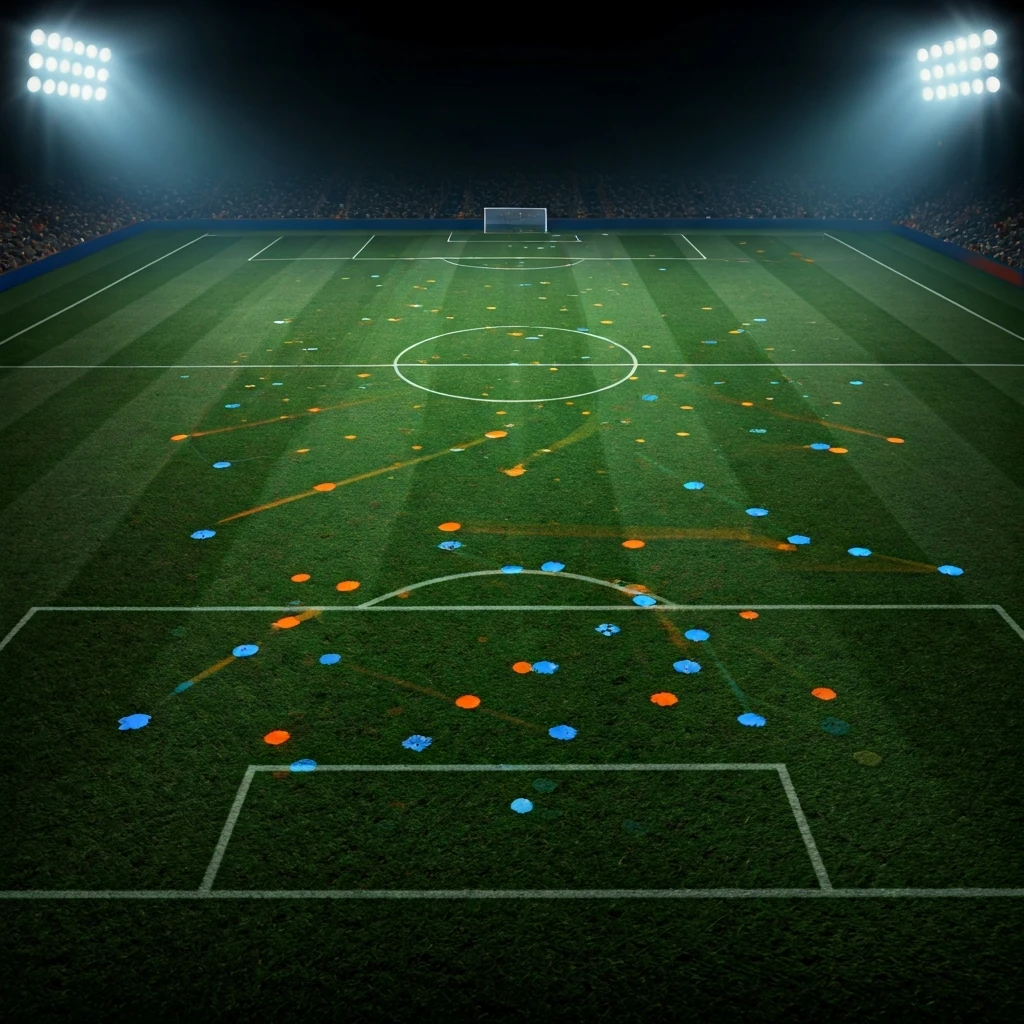
Suffocate the opponent in their own half. That’s the law of the jungle in modern soccer. High pressing in soccer isn’t just about chasing the ball desperately; it’s a coordinated hunt that starts with the forwards. For it to work, the whole team moves as a block, pushing a high defensive line up toward midfield and shrinking the opponent’s usable space. The basis for this synchronization is zonal marking, where each player is responsible for an area, closing passing lanes and forcing errors.
This approach turns defense into an attacking weapon, seeking to win possession back in dangerous areas of the field. The idea is simple: the closer to the opponent’s goal you win the ball, the shorter the distance to a shot. This concept, perfected by many of the Great Coaches and Their Philosophies, has become one of the best tactical strategies in modern soccer, rewarding speed of reaction and collective intelligence.
Advantages and Risks of the High Press
The main benefit is obvious: creating clear scoring chances immediately after a tackle. A team that masters the high press destabilizes the opponent’s build-up right from the source, causing panic and misplaced passes. This not only creates opportunities but also imposes psychological dominance, making the opponent think twice before trying to play out from the back in an elaborate way.
However, the high reward comes with an equally high risk. A high defensive line leaves vast space behind the center backs, an invitation for fast forwards to exploit long balls. A well-executed pass that breaks the first line of pressure can leave one or more players one-on-one with the goalkeeper. Executing this strategy successfully requires fast center backs, an alert goalkeeper ready to act as a sweeper and a level of coordination that can only be achieved through a lot of Tactical Training for Young Athletes and professionals.
Positional Play: Dominance on the Ball
Possession isn’t just passing it sideways. It’s about controlling space, manipulating the opponent and creating clear scoring chances. Positional play is a philosophy that turns the field into a chessboard, where each player occupies a specific zone to create passing lanes and dismantle the enemy defense. The idea isn’t simply to have the ball, but to know exactly what to do with it.
This approach requires tactical intelligence and near-perfect synchronization among the athletes. The ball moves to draw opponents in and open up spaces that will then be attacked. It’s a proactive strategy, where the team in possession dictates the pace and direction of the match, forcing the opponent to constantly react to its movements.
Fundamental Principles of Positional Play
The central concept of positional play is creating superiorities in order to progress up the field. This doesn’t just mean having more players in one area, but also positional and dynamic qualities that unbalance the marker. The goal is always to find a “free man” through an organized structure that offers multiple passing options to the player on the ball.
Creating Numerical Superiority
Numerical superiority is the pillar of build-up play in the positional style. By positioning players between the opponent’s lines, the team creates triangles and diamonds that always guarantee at least two passing options. This overloads the defense in a specific area of the field, making it easier to break the first line of pressure and progress with the ball under control.
Pinning and Unbalancing the Opponent
For superiority to work, defenders need to be pinned. Players holding the width on the wings, for example, force the opposing fullbacks to stay wide, creating space in the central channel. Once the opponent is “pinned” in a position, the team exploits the space created with quick movements, such as the famous “third man” run, completely disorganizing the defensive structure.
The Importance of Reading the Game
No strategy works without intelligent players to execute it. Positional play depends heavily on the athletes’ ability to read the game, understand space and make the right decision in fractions of a second. This perception is sharpened through meticulous Performance Analysis in Soccer and intensive Tactical Training for Young Athletes, which teaches these concepts from the youth ranks onward.
A player who masters this reading knows when to speed up, when to pause and where to move the ball to do the most damage. He doesn’t just follow a plan, but interprets the opponent’s reaction to exploit the next flaw. It’s the combination of tactical structure with creative and cognitive freedom within the system.
Success Stories: The Teams That Master Positional Play
When it comes to positional play, it’s impossible not to think of Pep Guardiola’s Barcelona, a team that redefined modern soccer with this philosophy. Building on concepts that are part of The History of Soccer Tactics, especially from Johan Cruyff, Guardiola took the strategy to a new level of dominance. His teams, including Bayern Munich and Manchester City, became synonymous with control and attacking soccer.
These teams show that, when well executed, positional play is one of the best tactical strategies in modern soccer for controlling opponents and piling up titles. Their success inspires many of today’s Great Coaches and Their Philosophies, who seek to adapt and evolve these principles for their own game models.
Set Pieces: The Hidden Opportunity to Score
A deadlocked game? Set pieces decide everything. Far from being luck, set pieces in soccer are a strategic battlefield where championship games are won and lost. Elite teams devote hours to turning corners and free kicks into clear scoring chances.
The planning is obsessive and detailed, often derived from in-depth Performance Analysis in Soccer of the opponent. Coaches and their staffs study the defenders’ positioning, the height of the line and the goalkeeper’s reactions to create rehearsed free kicks and set-piece routines. Every movement is choreographed to exploit a specific vulnerability.
From screens to free up a header to short routines that catch the defense by surprise, tactical corner kicks are a showcase of intelligence. Executing these plays is a competitive edge, showing how Great Coaches and Their Philosophies turn static moments into pure adrenaline and, of course, decisive goals.
Data Analysis and Technology in Tactical Decision-Making
The coach’s “gut feeling” is dead; welcome to the age of algorithms. Soccer is no longer the exclusive domain of intuition; it has become a battlefield where data and technology set the rules. Soccer data analysis has turned the coach’s whiteboard into an intelligence hub, where every decision is backed by concrete numbers and patterns.
Today, what happens on the field is measured, weighed and analyzed with frightening precision. Intuition still has its value, but it is now challenged and validated by a mountain of information that reveals what the naked eye often can’t pick up. It’s science invading the world’s most popular sport to optimize performance.
Collecting and Interpreting Performance Data
Every player on the field has become a walking data source. Through GPS vests and other biometric sensors, coaching staffs monitor everything in real time: distance covered, top speeds, accelerations, decelerations and even heart rate. This massive data collection is the first step toward complete Performance Analysis in Soccer.
However, having the raw data means nothing without the ability to interpret it. The real job of the modern soccer scout is translating those numbers into tactical insights. For example, a drop in a fullback’s number of sprints may indicate fatigue and the need for a strategic substitution before a fatal mistake happens.
Mapping Movements and Patterns
Tactical technology has advanced to map player behavior in detail. Heat maps show the areas of the field where an athlete is most active, revealing his tactical discipline or his tendency to abandon his position. This kind of visualization helps adjust positioning and cover spaces that could be exploited by the opponent.
In addition, tracking software analyzes off-the-ball movement, identifying running patterns that create passing lanes or disorganize the defense. It’s a level of detail that lets coaches identify both the strengths to exploit and the weaknesses to fix, turning the game into a high-speed chess match.
The Impact of Big Data on Decision-Making
Big Data takes analysis to another level, cross-referencing information from hundreds of games to find macro trends. Algorithms can predict the likelihood of a player getting injured based on his workload or identify which of an opponent’s tactical systems is most vulnerable to a certain type of attack. In-game substitutions and tactical changes are increasingly influenced by these predictions.
This quantitative approach also affects the transfer market. Clubs use data to find undervalued players who fit perfectly into their game model, minimizing the risk of bad signings. The decision is no longer based solely on a scout’s opinion and becomes an evidence-based strategic choice.
Technology Tools for Coaches and Analysts
Today’s coaching staff looks like a team of IT specialists, equipped with a technological arsenal. Tablets and laptops on the sideline allow instant video analysis, showing players what needs to be fixed at halftime. Software platforms such as Wyscout and others have become the main tool for studying opponents and analyzing one’s own team.
These digital resources allow Great Coaches and Their Philosophies to evolve constantly, adapting their ideas to what the data reveals. Drones that film training sessions from a privileged angle and tactical simulation software are other tools that make up the daily routine of elite clubs. Technology doesn’t replace the coach, but it gives him superpowers to make faster, smarter decisions.
The Future of Tactics: Where Is Soccer Heading?
The soccer of the future won’t be about new formations, but about their death. Fixed positions are on borrowed time, giving way to a fluidity where the player’s intelligence and adaptability define the game. We are entering the era of total soccer 2.0, where the system constantly molds itself to the needs of the moment, driven by tactical innovations that challenge conventional thinking.
The Rise of Versatility and Multi-Purpose Players
The main trend for the future of soccer tactics is the “hybrid” player. Forget the fullback who only defends or the forward who only finishes; the elite athlete will be able to perform multiple roles at a high level over the 90 minutes. This search for complete players, driven by some of the Great Coaches and Their Philosophies, redefines what it means to be a specialist on the field, requiring a much deeper tactical understanding from the youth ranks onward, as seen in Tactical Training for Young Athletes.
This versatility isn’t just a luxury, but a strategic necessity. Teams with multi-purpose players can change their tactical system without making substitutions, creating numerical superiority in different areas of the field unpredictably. A center back who steps up into midfield or a winger who becomes a false 9 are just the first signs of this revolution in progress.
Technology will be the catalyst for this transformation, with Performance Analysis in Soccer identifying patterns and possibilities the human eye can’t see. The combination of physically prepared, tactically intelligent athletes armed with real-time data will create a faster, more complex and more fascinating game. The future is a chessboard in constant motion, where every piece can play multiple roles.
The Future of the Game: The Next Tactical Frontier
Cracking the code of modern soccer means understanding that tactics are an endless cycle of innovation and adaptation. The strategies discussed here — from positional play to the high press — are not end points, but chapters in a constantly evolving story. The elite teams of the future will be those that not only master current concepts, but also show a chameleon-like ability to adapt, often within the same match. The ever-deeper integration of data analysis and artificial intelligence promises to accelerate this evolution even further, making the chess game played on grass even more complex and fascinating. The only certainty is that the next great tactical revolution is already being drawn up on some visionary’s whiteboard.
Frequently Asked Questions About Soccer Tactics
What are the most popular tactical formations in today’s soccer?
The most popular formations today are the 4-3-3, known for its attacking intent and flexibility, the 4-2-3-1, which offers great balance between defense and attack, and the 3-5-2, valued for numerical superiority in midfield and the versatility of its wingbacks. The popularity of each depends on the coach’s philosophy and the traits of the available players.
How does quick transition affect the modern game?
Quick transition is one of the most decisive moments in modern soccer. A fast attacking transition exploits the disorganization of the opposing defense to create scoring chances, while an efficient defensive transition neutralizes counterattacks by pressing immediately or regrouping compactly. Mastering transitions is essential to controlling the tempo and outcome of the game.
What is positional play and why does it matter?
Positional play is a tactical philosophy focused on dominating the opponent through control of the ball and space. Its importance lies in its ability to create scoring chances systematically, manipulating the opponent’s defensive structure by generating numerical superiority and finding free players between the lines. It’s a proactive strategy that dictates the pace of the match.
Does technology really change a team’s tactics?
Yes, technology has drastically changed tactics. Data analysis tools and GPS allow coaching staffs to monitor physical performance, identify patterns in the opponent and optimize their own strategies based on concrete evidence. This makes tactical planning more precise and decision-making better informed.
What is the difference between high pressing and zonal marking?
High pressing refers to *where* the team tries to win the ball back, specifically in the attacking half, close to the opponent’s goal. Zonal marking, on the other hand, refers to *how* players defend, with each one responsible for an area of the field rather than a specific opponent. High pressing is often carried out using the principles of zonal marking to close down space in a coordinated way.