Anúncios
In a game that seemed decided, a quiet tactical change turned the scoreline around, shocked the world, and rewrote the modern soccer playbook. An underdog team used a hybrid strategy that completely confused the favored opponent and secured a historic win. This article uncovers the secrets behind this on-field revolution, detailing the mind behind the move, the secret preparation, and the impact it’s already having. Get ready to discover a new path to dominating soccer with advanced strategies that could change everything you know about the game.
The Shocking Fact: The Revolutionary Tactic That Secured the Unexpected Win
The game seemed settled. For the public, the media, and even the bettors, the result was a formality. A soccer giant against a hardworking but visibly inferior team. And for an hour of play, the script went exactly as expected. The bigger team was winning comfortably, controlling possession and the tempo of the match. But then something changed. A quiet, almost imperceptible adjustment that turned the game upside down and left everyone’s jaws on the floor.
Anúncios
The Crucial Moment: Analyzing the Tactical Turnaround on the Pitch
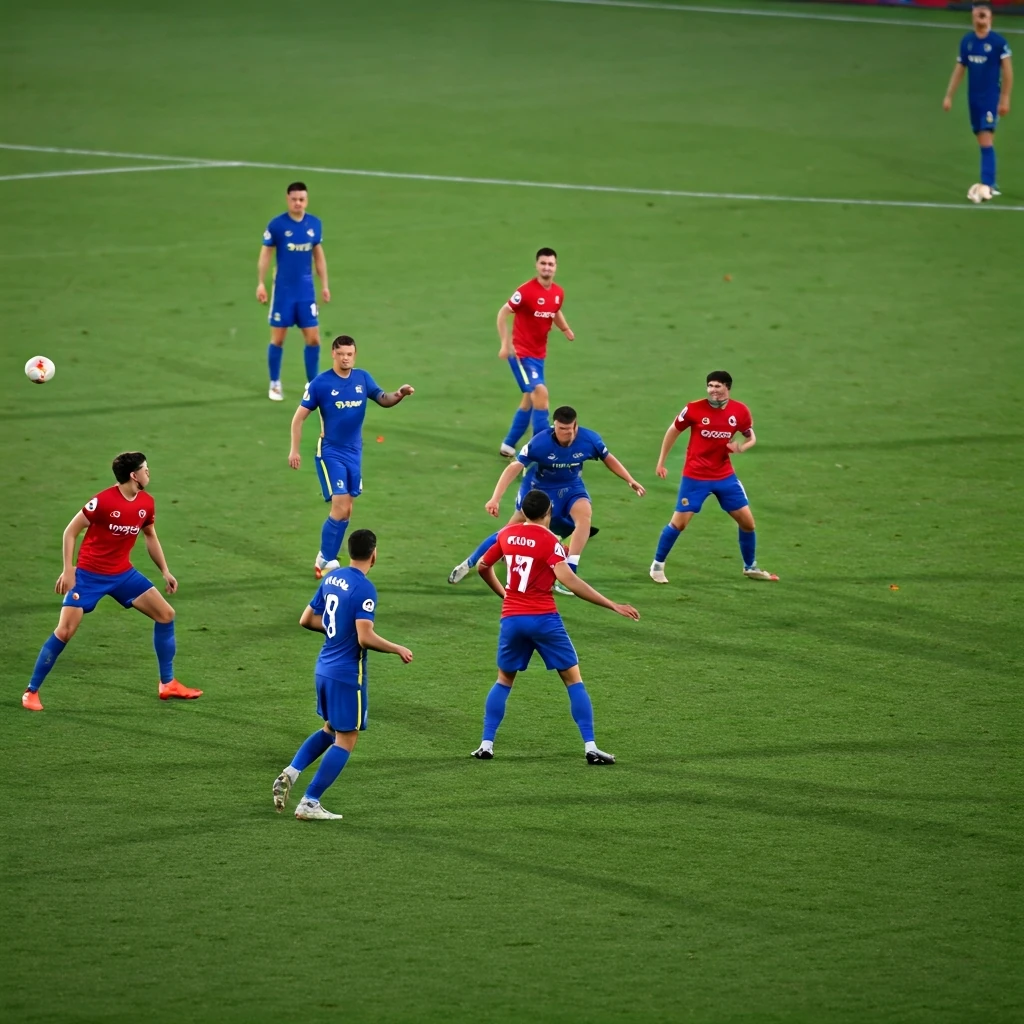
The turnaround didn’t come from a substitution, but from a bold positional reconfiguration. The team that was losing abandoned its traditional formation and adopted a hybrid system, with the fullbacks turning into central midfielders whenever the team had the ball. This movement created numerical superiority in the most important area of the pitch, completely confusing the opponent’s marking, which didn’t know whom to follow. Suddenly, the dominant team found itself lost, chasing ghosts.
This approach defied everything expected of a conventional defensive structure. The fluidity of positions broke the opposing lines, creating space where none had existed before. It was a hands-on lesson demonstrating how a Detailed Analysis of Defensive Tactics in Soccer can be the key to finding any opponent’s weak spot, no matter how strong they seem.
Anúncios
Breaking Down the Execution and Real-Time Adjustments
The execution was surgical and clearly drilled to exhaustion. The triggers for the positional shift were the movements of the opposing holding midfielder. As soon as he moved to one side, the fullback on that side left the back line and attacked the space in the middle. The hand-signal communication between players was intense, showing that adjustments happened in seconds, based on what the opponent did. This suggests heavy use of data, something that shows How Technology Is Changing Performance Analysis in Soccer today.
- Inverted Fullbacks: Instead of overlapping down the flanks, the fullbacks cut into the center, acting as “false holding midfielders.”
- Coordinated Pressing: The team began pressing in blocks of three players, forcing errors in the opponent’s buildup.
- Striker Flexibility: The center-forward started dropping into midfield, opening lanes for the wingers to run in behind, who became the most advanced players.
Who Was Behind the Brilliant Idea? The Mastermind of the Strategy
The mind behind this turnaround has a first and last name. He’s a coach known in the game for his unorthodox ideas and his courage to take risks. While many cling to manuals and established tactics, he looks for inspiration in other sports and alternative schools of soccer. His philosophy is clear: soccer is a game of spaces, and whoever controls them controls the scoreboard. He’s not on the list of the most famous, but his approach places him among the most impactful of Today’s Best Soccer Coaches and Their Philosophies.
Profile of the Tactical Architect and His Playing Philosophy
This coach has a track record of taking over teams considered “underdogs” and turning them into formidable opponents. He believes tactical rigidity is creativity’s biggest enemy. His training methodology focuses on solving problems on the pitch rather than just repeating set moves. For him, every player must be able to play in at least two different positions, ensuring the fluidity he values so highly and that was the key to the shocking win.
The Immediate Impact on the Championship and the Standings
The result was a bombshell in the league table. The unexpected win not only gave the smaller team three vital points, but also stripped the giant of its favorite status and first place, leaving it under pressure and under scrutiny. The sports press, which had treated the matchup as an easy game, is now intensely debating the “tactical revolution” it witnessed. The domino effect was instant, with other lower-budget teams already studying the strategy in an attempt to replicate the feat. The season, which had seemed predictable, gained a dose of chaos and unpredictability nobody expected.
Behind the Scenes and Hidden Details: The Secret Preparation for Dominance
But what happened away from the cameras? That overwhelming dominance wasn’t magic; it was method. While everyone saw an improbable upset, behind the scenes a war-room operation was being carried out in absolute secrecy, focused on reprogramming the team to think and play in a way no opponent would expect. The preparation was the real secret weapon.
The Innovative Training Methodology and Its Pillars
The coaching staff threw out the traditional manual. The new training philosophy wasn’t about running more, but about thinking faster and occupying space intelligently. The goal was to create mental “triggers” in the players, where every opponent movement set off an automatic, coordinated response from the whole team, turning the pitch into a chessboard where they were always two moves ahead.
Specific Drills and Adaptations to the Playing Style
The training sessions were unlike anything the players had seen before. Sessions were short but mentally extremely intense. Drills were introduced that simulated information overload and constant pressure, forcing decisions in fractions of a second. Everything was focused on breaking old habits and building new ones.
- “Controlled Chaos” Drills: Small-sided exercises with more balls than players, pushing communication and spatial awareness to the max.
- Numerical Inferiority Simulations: The team learned to defend and counterattack with one or two players fewer in specific areas, making the defense far more cohesive in real situations. This approach resembles a Detailed Analysis of Defensive Tactics in Soccer, but applied in an extremely practical way.
- Quick Decisions Under Fatigue: At the end of sessions, with the players already exhausted, complex tactical problems were introduced to be solved in a few seconds, simulating the final minutes of a decisive match.
The Crucial Role of Data and Video Analysis in the Strategy
Technology was the great ally. The coaching staff dove into data to find patterns no one else could see. They didn’t just look at opponents’ goals or assists, but at micro-movements: how a center-back turns his body before a long pass, or a midfielder’s tell under pressure. It was a clear demonstration of How Technology Is Changing Performance Analysis in Soccer, turning data into a direct competitive advantage.
Tools and Software Used by the Coaching Staff
The analysis team used a combination of cutting-edge software to map the opponents’ tactical DNA. They built predictive models that anticipated the most likely plays in different zones of the pitch, allowing the team to position itself preemptively. The process was methodical and relentless.
- Pattern Mapping: Tracking software identified the opposing players’ preferred “routes” and most frequent passing combinations.
- Predictive Analysis: Based on this data, an algorithm calculated the probability of each next action, generating a “heat map” of the opponent’s intentions.
- Virtual Simulation: The coaching staff used tactical simulation software to test their responses against the predicted patterns, adjusting the strategy without even having to step onto the pitch.
The Winning Mentality: Psychology and Cohesion on the Pitch
Tactics and technology would have been useless if the players’ minds weren’t armored. The psychological work was perhaps the most important pillar. The coach, with an approach reminiscent of some of Today’s Best Soccer Coaches and Their Philosophies, sold them the dream that they weren’t just a team, but the pioneers of a new way of playing. They didn’t take the field to compete; they took it to prove everyone else wrong.
“The first thing we told them was: forget the scoreboard, forget the opponent. Our only enemy is hesitation. If you think, you’ve already lost. Just execute what we’ve trained.” — Internal source from the coaching staff.
This relentless focus on execution and mutual trust created a cohesion rarely seen. Every player trusted that his teammate would make the right move, allowing the high-speed, high-risk strategy to work. The winning mentality turned a group of good players into a dominant, relentless unit.
The internet simply broke. While on the pitch the strategy unfolded with surgical precision, off it the soccer world was melting down trying to understand what was happening. The winning mentality that created a relentless unit on the field sent a shockwave that swept through social media and sports panel shows.
Fallout and Social Media Reaction: What Fans and Experts Are Saying
The final whistle was just the beginning of the commotion. The dominant performance not only secured the win but also sparked an instant global debate. From casual fans to tactical analysts, everyone had an opinion, and digital platforms became the main battleground for discussing the audacity they had just witnessed.
Panic and Surprise: The Social Media Explosion
The fans’ reaction was immediate and visceral. Within minutes, the internet was flooded with an avalanche of content, a mix of euphoria, disbelief, and admiration. Supporters of the winning team celebrated the genius, while rivals tried to downplay the feat, calling it “luck” or “madness.”
- Instant memes: Edits portraying the coach as a chess genius and the players with superpowers spread quickly and went viral.
- Heated debates: Forums and discussion groups caught fire. Gigantic threads tried to decode every move, with theories ranging from tactical brilliance to a rare alignment of the stars.
- Reaction videos: Influencers and fans recorded their reactions in real time, capturing the shock and surprise that defined that moment for millions of viewers.
The View from Top Sports Journalists and Former Players
If the fans were in an uproar, the experts weren’t far behind. At first, many TV pundits and former players seemed caught off guard, offering vague and even skeptical analysis. Some went as far as calling the approach “irresponsible” and “unsustainable,” questioning the lack of a traditional defensive structure.
However, as the hours went by, the narrative changed. More in-depth analysts began publishing their assessments, praising the courage and innovation behind the system. The discussion about the genius of the mastermind behind the team put him in conversations about **today’s best soccer coaches and their philosophies**. The strategy directly challenged the traditional playbook, showing that a good **detailed analysis of defensive tactics in soccer** must now consider ways to stop such dynamic and unpredictable attacks.
What Comes Next: The Future of the Game After the Strategy
The bomb went off in the soccer world. Now that the dust has settled, the question everyone is asking is: what now? The impact of this innovative strategy wasn’t confined to the four lines of the pitch; it sent shockwaves that are redrawing the sport’s tactical map. What was once considered bold is now seen as the new standard to beat.
Will Other Teams Adopt It? The First Attempts to Copy
You can bet on it. In soccer, success inspires imitation almost instantly. Analysts and coaching staffs around the world are already poring over the footage, trying to decode every move and every decision behind this approach. The first copies, however, tend to be superficial, focusing more on form than on the essence that made the strategy so lethal.
Challenges and Adaptations When Other Teams Implement It
Copying isn’t as simple as it seems. Adopting this philosophy takes much more than just changing the tactical diagram on paper. It’s a change of mindset that faces cultural and practical barriers within a club. Without the right ingredients, an attempt to replicate the success can end in complete tactical disaster.
- Squad Profile: The strategy depends on extremely tactically intelligent, versatile players capable of performing multiple roles at high intensity. Finding or developing players with this profile is the first major obstacle.
- Time and Patience: Implementing such a complex system doesn’t happen overnight. It takes months of focused training and, more importantly, patience from the board and the fans to endure the early mistakes that will surely come.
- Coaching Staff Courage: The coach has to have conviction and back the idea, even under pressure. Many are inspired, but few have the boldness to follow the path to the end, especially when results are slow to arrive.
The Tactical Evolution of Soccer: A New Paradigm in Sight?
What we saw may be the start of a new tactical era. This strategy broke old ideas about fixed positions and the rigid separation between areas of the pitch. It promotes a more fluid soccer, where players constantly swap roles, creating organized chaos that dismantles traditional defenses. A detailed analysis of defensive tactics in soccer now needs to evolve to find answers to this unpredictability.
The Role of Technology and Continuous Innovation in the Sport
This revolution wouldn’t have been possible without technological support. Data analysis, GPS tracking, and performance metrics were essential for identifying patterns and the players’ physical capacity to execute the plan. The debate over how technology is changing performance analysis in soccer gains a practical, powerful example, showing that innovation is the engine of modern sport.
The trend is for this to intensify. Artificial intelligence is already starting to be used to simulate tactical scenarios and optimize training. The game is becoming high-speed chess, where the ability to process information in real time and adapt is just as important as talent with the ball at your feet.
The Lasting Legacy of This Winning Approach in Soccer
When we look back, this team’s legacy won’t be measured only in trophies, but in the way it forced the game to evolve. Like other iconic teams that changed history, it introduced a new concept that will serve as a reference for a long time. The biggest impact is forcing every opponent out of their comfort zone.
To compete, you’ll have to innovate. That raises everyone’s level and forces even today’s best soccer coaches and their philosophies to reinvent themselves. The direct consequence is a smarter, more dynamic, and more competitive game. In the end, this strategy wasn’t just a path to victory, but a catalyst that pushed the entire sport into the future.
Conclusion: The Future of Soccer Is Fluid and Unpredictable
The strategy that shook the foundations of soccer wasn’t a mere stroke of luck, but definitive proof that innovation, courage, and deep data analysis are the new currency of the sport. We’ve seen that tactical rigidity’s days are numbered, giving way to fluid systems where players’ intelligence and versatility beat brute force. The unexpected win showed that, with the right preparation and a fearless mindset, it’s possible to challenge giants and redefine paradigms.
The impact of this approach is already reverberating, forcing coaches, analysts, and even fans to rethink the game. The path to dominating soccer now runs through understanding and, perhaps, applying these advanced strategies. The board has changed, and those who don’t adapt risk being left behind in this new era of the sport.
Frequently Asked Questions
What was the main tactical innovation that shocked the soccer world?
The main innovation was the implementation of a hybrid, fluid system in which the fullbacks left the flanks to play as central midfielders whenever the team had possession. This movement created unexpected numerical superiority in the center of the pitch, completely disorganizing the opponent’s defensive structure.
How can other teams apply this advanced strategy?
Applying it takes more than a simple change of formation. It requires versatile, tactically intelligent players, a long period of training focused on quick decision-making, and a courageous coaching staff willing to stick with the idea, even under early pressure for results.
How did the media and fans react to the new tactic?
The initial reaction was shock and disbelief, both on social media and among experts. The surprise quickly gave way to an intense debate, with many praising the genius and courage of the innovation, while others remained skeptical about its sustainability. The tactic went viral, generating memes, analysis, and heated discussions.
Is this tactical approach sustainable in the long run in modern soccer?
Although it’s challenging to maintain due to its high physical and mental demands, the approach signals a new paradigm in soccer. Its sustainability will depend on other teams’ ability to develop counter-tactics and on the continued evolution of the strategy itself. It represents the future of a more fluid, less positional game.