Anúncios
Have you ever felt the frustration of having the perfect scoring chance, only for your shot to come out weak, off target or straight into the goalkeeper’s hands? That is the reality for many amateur players and even developing athletes. The difference between a shot that ripples the net and one that ends up in the stands is not just power, but a complex combination of technique, positioning and game intelligence that great goal scorers have mastered.
Mastering the art of shooting in soccer goes far beyond simply hitting the ball as hard as possible. It involves understanding the biomechanics of the movement, from the approach run to the follow-through of the leg. Every detail, such as the position of the plant foot, the lean of the body and the exact point of contact with the ball, contributes to the final result, whether it is a guided missile into the top corner or a placed, curling finish that leaves the goalkeeper no chance.
Anúncios
In this complete guide, we will reveal all the secrets to turning your shot into a lethal weapon. We will cover the essential fundamentals that form the basis of a good strike, explore the different types of shots for each game situation and present practical drills to increase both your power and your accuracy. We will also identify the most common mistakes that sabotage your finishing and show you exactly how to fix them, making sure you are ready to decide the match when the opportunity comes.
Shooting Fundamentals: The Foundation of a Good Strike
Think shooting well is just about power? Think again. The fundamentals of shooting in soccer are the real key to sending the ball where you want it, with the power you need. It all starts before your foot even touches the ball, with the correct body position for the shot. Your plant foot should be beside the ball, pointing at the target, while your body leans slightly forward to keep the shot low and accurate.
Anúncios
The next step is contact with the ball, the moment that defines the trajectory and speed. For a powerful shot, contact should be made with the instep, the hardest and flattest part of the foot. If placement is the priority, the inside of the foot offers more control, which is fundamental in many Attacking Tactics in Soccer. Mastering this variation turns an ordinary player into a constant threat.
Finally, the movement does not end at contact. Continuing the motion of the leg, known as the “follow-through”, is essential to transfer all the energy to the ball and ensure the right direction. Skipping this step is a common mistake that limits the power and accuracy of the strike. A good shot is a fluid sequence, from the approach run to the end of the movement.
Types of Shots: Variety to Surprise the Goalkeeper
Think one kind of shot is enough? Think again. Mastering different finishes is what separates the ordinary player from the decisive goal scorer. A varied repertoire not only increases your chances of scoring, it becomes a fundamental weapon within Attacking Tactics in Soccer, breaking predictability and keeping any defense on alert.
Each game situation calls for a specific type of shot, and the right choice can be the difference between glory and regret. A true star knows how to read the moment, the goalkeeper’s position and the distance to goal in a fraction of a second. It is this tactical intelligence that turns a simple finish into a masterstroke.
The Instep Drive: Power and Accuracy
When you need raw power, the instep shot is your best tool. This technique uses the top of the foot, where the laces are, to generate a powerful, straight strike, ideal for mid- and long-range finishes. The ball travels at maximum speed, making it hard for the goalkeeper to react.
To execute it perfectly, your body should be slightly leaning over the ball, with your plant foot firmly beside it. The secret is striking the center of the ball with the instep, ensuring a stable trajectory. Good Strength Training for Soccer helps maximize the explosiveness needed for this type of shot.
The Placed Shot: Perfection in the Corner
Power is not always the answer. The placed shot, also known as the “side-foot finish”, trades power for surgical precision. Using the inside of the foot, the player tries to put the ball out of the goalkeeper’s reach, aiming for the corners of the goal, where saves are hardest.
This finish is perfect for situations inside the box or in one-on-ones with the goalkeeper, when there is little room for a hard shot. Beyond these two main techniques, options like the toe poke are valid in desperate moments or very fast plays, proving that a complete finisher always has an ace up their sleeve.
| Type of Shot | Part of the Foot Used | Main Advantage |
|---|---|---|
| Instep Drive | Top of the foot (where the laces are) | Maximum power and a straight trajectory |
| Placed Shot (Side-Foot) | Inside of the foot | High accuracy and the ability to curl the ball |
| Toe Poke | Tip of the foot | Speed and surprise in tight spaces |
| First-Time Shot | Varies (instep or side-foot) | Eliminates the defense’s reaction time |
The Importance of Power and Accuracy: An Essential Balance
What good is having a cannon for a foot if your aim is completely off? Shooting power in soccer impresses the crowd and intimidates opponents, but without direction, it is pure wasted energy. A shot that explodes into the stands does not change the score and does not win games; it is just an empty show. The intelligence to choose the right target is a fundamental part of Attacking Tactics in Soccer and is what truly defines a lethal finisher.
On the other hand, shooting accuracy is the art of putting the ball exactly where the goalkeeper cannot reach. However, that placement needs pace to be truly effective, because a well-placed but slow shot becomes a routine save. The real challenge is finding balance in your shot, combining power and technique to create an unstoppable finish. That perfect calibration is the hallmark of great strikers and can be improved with good Strength Training for Soccer.
Practical Drills to Improve Your Shot
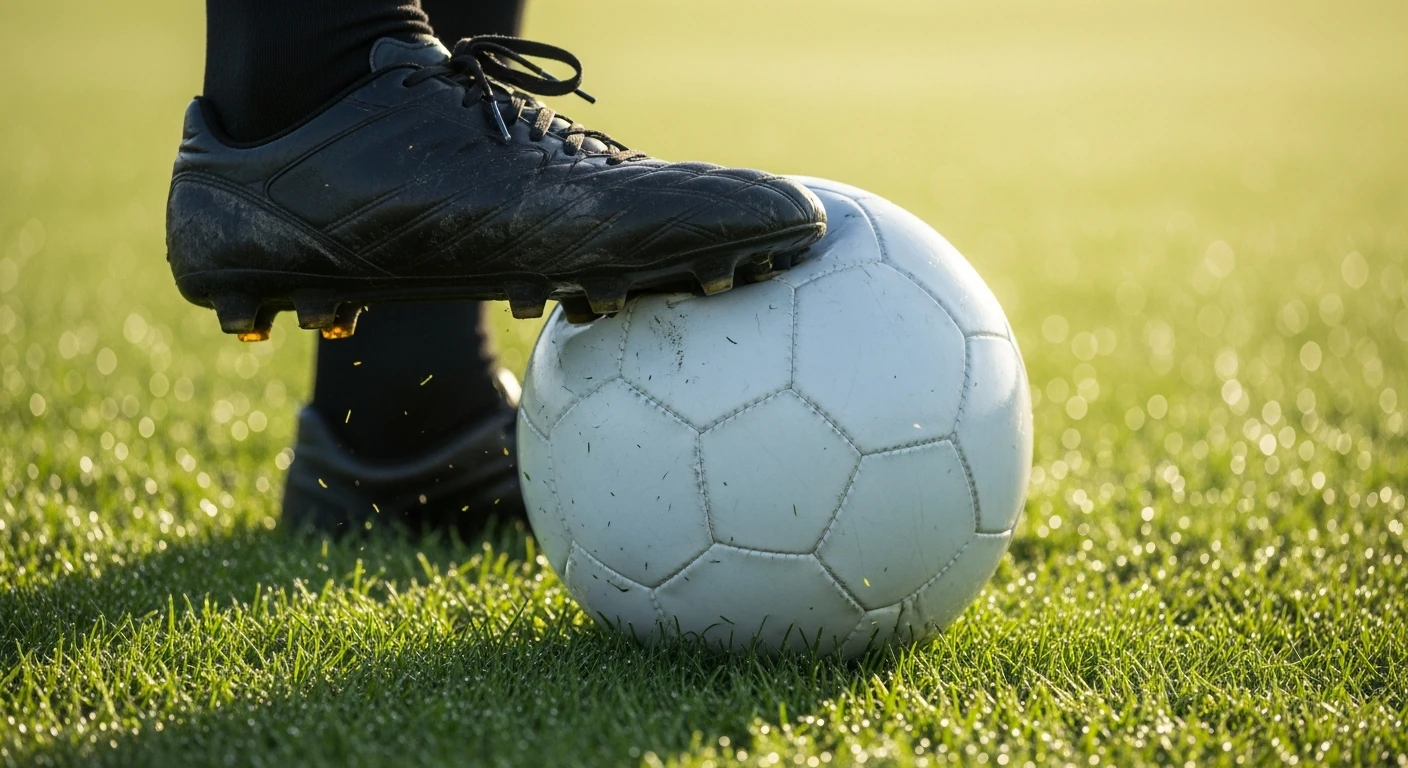
Want to shoot like a real pro? The secret is not magic, it is hard training. Going from an average player to a constant threat depends on how you use your time away from games. The right soccer shooting drills turn raw power into surgical precision, and that is what separates the good from the lethal.
Target Practice: Aiming for Perfection
Power without direction is useless. Before trying to blast the ball, you need to know where it is going. Target practice is fundamental to developing the accuracy and composure you need in front of goal. Start by focusing on hitting specific areas, not just on scoring.
Place targets, such as cones or bottles, in the four corners of the goal. Start at a comfortable distance and take shots trying to hit each target in sequence. Do not worry about power at first; the goal here is to refine your ball-contact technique and body positioning so you can direct the shot with precision.
As your accuracy improves, increase the distance and start varying the type of shot, alternating between the instep drive and the side-foot finish. This constant practice sharpens your ability to make quick decisions, a pillar of the most effective Attacking Tactics in Soccer.
Power Drills: Strengthening Your Strike
With your aim dialed in, it is time to add power to make your shot unstoppable. The power of your strike does not come from your leg alone, but from a kinetic chain that involves the core, hips and glutes. Complete shooting practice needs to strengthen these muscles to generate the necessary explosiveness.
Focus on Glutes and Quads
The muscles of the thighs and buttocks are the engines of your shot. Exercises such as squats, lunges and box jumps are essential for building a strength base. They not only increase power but also improve your body’s stability during the movement, helping prevent injuries.
Integrating these movements into your routine is crucial. A well-structured Strength Training for Soccer program will focus on these muscle groups to make sure your body can transfer maximum energy to the ball. The strength generated here is what turns an ordinary shot into a missile.
Repetition and Muscle Memory
Perfection comes from repetition, but only correct repetition. Taking hundreds of shots with the wrong technique will only reinforce bad habits. The goal is to build muscle memory, so that the ideal shooting motion becomes automatic and instinctive in a game situation.
Devote part of your training to simply shooting against a wall or a rebounder. Concentrate fully on form: the placement of your plant foot, the rotation of your hips and the follow-through of your kicking leg. Record yourself shooting and compare it with professional players to identify areas for improvement, a basic form of Soccer Performance Analysis.
This discipline in repetition benefits not only your shooting but other skills as well. Improved mechanics help you understand How to Improve Your Passing in Soccer, since many principles of ball contact are shared. Consistency is what turns conscious effort into natural mastery.
Shooting in Game Situations: Adaptation and Quick Decisions
What good is perfect technique if your head cannot keep up? In the heat of the game, the decision to shoot, and how to shoot, is worth more than any isolated training session. Reading the space, the goalkeeper’s position and the defenders’ movement in a fraction of a second is what defines a lethal finisher. This goes beyond the mechanics of shooting and into the realm of Attacking Tactics in Soccer, where game intelligence beats raw power.
Adapting is the name of the game for anyone chasing goals. A shot under pressure demands the calm to choose between power and placement, between catching the keeper out at the near post or going for the far corner. This ability to make the right decision quickly is what separates good players from the stars who decide matches. Pressure is a privilege, and knowing how to handle it is a powerful weapon.
The First-Time Shot: The Ultimate Surprise
The first-time shot is the ultimate weapon against organized defenses and alert goalkeepers. It eliminates the opponent’s reaction time, turning a quick pass into a clear scoring chance. The ball arrives and is gone, without a controlling touch, catching everyone by surprise. It is a move of pure instinct, built through hours of repetition so the body knows what to do before the brain has fully processed the play.
Executing it requires impeccable body positioning to attack the ball at the right moment and ensure clean contact. The focus here is not maximum power, but the accuracy and speed of the finish. Keeping your body over the ball stops it from rising, turning a golden opportunity into a dangerous shot instead of a goal kick for the opponent.
Free Kicks and Penalties: Decisive Moments
A free kick just outside the box. A penalty in the final minute. In these moments, time stands still and every eye turns to a single player. The pressure is immense, turning the kick into a direct mental duel with the goalkeeper. It is your technique and confidence against the opponent’s anticipation and preparation, where Soccer Performance Analysis can give you an edge.
On free kicks, the choice is yours: a powerful shot over the wall, taking advantage of the power built through Strength Training for Soccer, or a curling strike aimed at the goalkeeper’s corner. On penalties, the rule is clear: pick a corner, trust your decision and execute with conviction. Hesitating gives the goalkeeper the chance they need to become the hero.
Common Shooting Mistakes and How to Fix Them
Is your shot coming out weak and off target? The culprit may be details you are ignoring. Many players blame the ball or their cleats, but the truth is that small adjustments to your technique can turn a mediocre shot into a guided missile. Identifying these soccer shooting mistakes is the first step to becoming a lethal finisher.
Fixing a weak shot does not require brute strength, but smart movement. From the way you set yourself up to the very last instant of the motion, every phase is crucial. The good news is that, with attention and practice, these bad habits can be eliminated, drastically improving your effectiveness in front of goal. Doing a Soccer Performance Analysis by recording your own shots can reveal exactly where you are going wrong.
Incorrect Posture: The Root of Many Problems
The foundation of a powerful shot is a balanced posture. A classic mistake is placing your plant foot too far from or too close to the ball, which throws your whole body off balance and robs the movement of power. The plant foot should be beside the ball, pointing at the target, providing a solid base for the kicking leg to swing freely and powerfully.
Another common problem is leaning back at the moment of impact, a reflex that sends the ball flying out of control. To keep the shot low and powerful, lean your torso slightly forward, over the ball. This uses your body weight to your advantage and is a principle that benefits greatly from a core strengthened through Strength Training for Soccer.
Wrong Point of Contact: Where the Power Disappears
You can have perfect posture, but if you strike the wrong part of the ball, the power dissipates. For a straight, powerful shot, the goal is to hit the exact center of the ball with the instep, the hard part where the laces are. Catching the ball “right on the sweet spot” transfers maximum energy from your body to the ball, resulting in speed and accuracy.
When a shot comes off “shanked” or lacking power, it is usually because contact was made too far to the side or unintentionally with the inside of the foot. Consistently striking the center of the ball is what separates amateurs from elite finishers. This precision in contact is fundamental, and it also applies when learning How to Improve Your Passing in Soccer, since the biomechanical principles are similar.
Striking the Top or Bottom of the Ball
Hitting the ball slightly above its equator makes it roll along the ground with little lift, which can be useful in certain situations but usually results in an easy shot for the goalkeeper. On the other hand, the most famous mistake is striking the bottom of the ball. This makes it rise too much and is the main reason shots end up in the stands.
Lack of Follow-Through: Finishing the Movement
Many players think the shot ends the moment the foot touches the ball. That is a fatal mistake. The follow-through is what ensures that all the energy generated is transferred and directed correctly. Cutting the movement short is like slamming on the brakes in the middle of accelerating.
After impact, your kicking leg should continue its motion toward the target, as if you wanted to go right through the ball. This complete, fluid movement not only increases power but also improves the accuracy of your shot. Let your leg follow its natural path, finishing the arc of the movement in an elegant and powerful way.
Equipment and Training Gear That Help
Think talent alone is enough? The right equipment simply changes the game. Having the proper gear is not a luxury, it is a necessity for anyone who wants to improve their shot. Choosing the right cleats, for example, directly affects your contact with the ball and the stability of your plant foot. In addition, training consistently with good-quality soccer balls ensures you get used to the weight and response you will find in a real match.
There is other shooting training equipment that can speed up your progress impressively. Rebounders are perfect for practicing first-time finishing, while mini goals force you to sharpen your accuracy in tight spaces. Using these items, combined with a good Strength Training for Soccer plan, creates a complete arsenal to turn your finishing into a lethal weapon for your team.
The Shooter’s Mindset: Confidence and Pressure
Technique is nothing without the right mindset for the game. A strong soccer shooting mindset is what separates good players from the stars who decide matches. Confidence is not a bonus; it is the foundation that holds your technique together under pressure, ensuring you execute the perfect movement when it matters most.
Visualization and Focus: Preparing the Mind
Before the ball even arrives, the best finishers have already scored in their heads. Visualization is a powerful weapon: picture the exact trajectory of the ball, the sound of the net rippling and the celebration. This mental exercise trains your brain for success and pushes away the doubts that can creep in at the decisive moment.
When the opportunity comes, your focus needs to be absolute. Ignore the crowd, the defender on your heels and the pressure of the result. The world comes down to you, the ball and the goal, a tunnel of concentration where only executing the technique matters, turning the chance into reality.
Managing Pressure in Crucial Moments
Freezing when it is time for a penalty or a decisive shot is every player’s nightmare. The key to handling pressure when shooting is not to eliminate it, but to control it and use it to your advantage. Take a deep breath, remember the hundreds of shots you have already hit in training and focus on the process, not the final result.
Your confidence when shooting is built both in practice and in your mind. Knowing that your body is prepared, with good Strength Training for Soccer, removes doubts about your physical ability and gives you the peace of mind to focus solely on the finish. It is this assurance that turns a moment of panic into an opportunity for glory.
Mastering the Shot: Your Next Step Toward Goal
We have reached the end of this guide, but your journey to becoming an elite finisher is just beginning. Mastering shooting in soccer is an ongoing process that combines refined technique, mindful repetition and the intelligence to make the right decision under pressure. Remember that power without accuracy is useless, and accuracy without enough power can be easily saved. The real power lies in the balance between these two elements.
Do not be discouraged by mistakes; see them as learning opportunities. Every shot that goes wide, every weak finish, is valuable feedback about your posture, your timing or your movement. Use the drills and tips in this article as your training manual. Now it is up to you: grab the ball, head to the field and turn your effort into goals. The net is waiting.
Frequently Asked Questions About Shooting in Soccer
What is the difference between an instep drive and a placed shot?
The main difference lies in the intention and the part of the foot used. The instep drive uses the top of the foot to generate maximum power, ideal for long distances. The placed shot, or side-foot finish, uses the inside of the foot to prioritize accuracy and curl, aiming to put the ball out of the goalkeeper’s reach.
How many days a week should I practice my shooting to see results?
Consistency is key. To see significant improvement, it is recommended to practice shooting 2 to 3 times a week in focused sessions. It is important to balance training with adequate rest to allow muscle recovery and avoid overuse injuries.
What is the best cleat for shooting with more power?
No cleat generates power on its own, but some features help. Cleats with a clean, wide strike zone on the instep and a good lockdown system can optimize the transfer of energy from your foot to the ball. Models designed for strikers usually prioritize these features.
How can I improve my shooting accuracy quickly?
For quick improvement, focus on the fundamentals before power. Place your plant foot beside the ball pointing at the target, keep your torso leaning over the ball and make sure you follow through toward the goal. Start with short-range target practice to build the correct muscle memory.
Is it better to shoot with your dominant foot or train both?
The initial priority is to perfect your shot with your dominant foot, since it will be your main weapon. However, devoting time to training your non-dominant foot is what distinguishes a good player from a complete, unpredictable one. Try to devote about 20-30% of your finishing practice to your weaker foot.